19 Layered Hairstyles for Medium Hair to Add Movement
By 
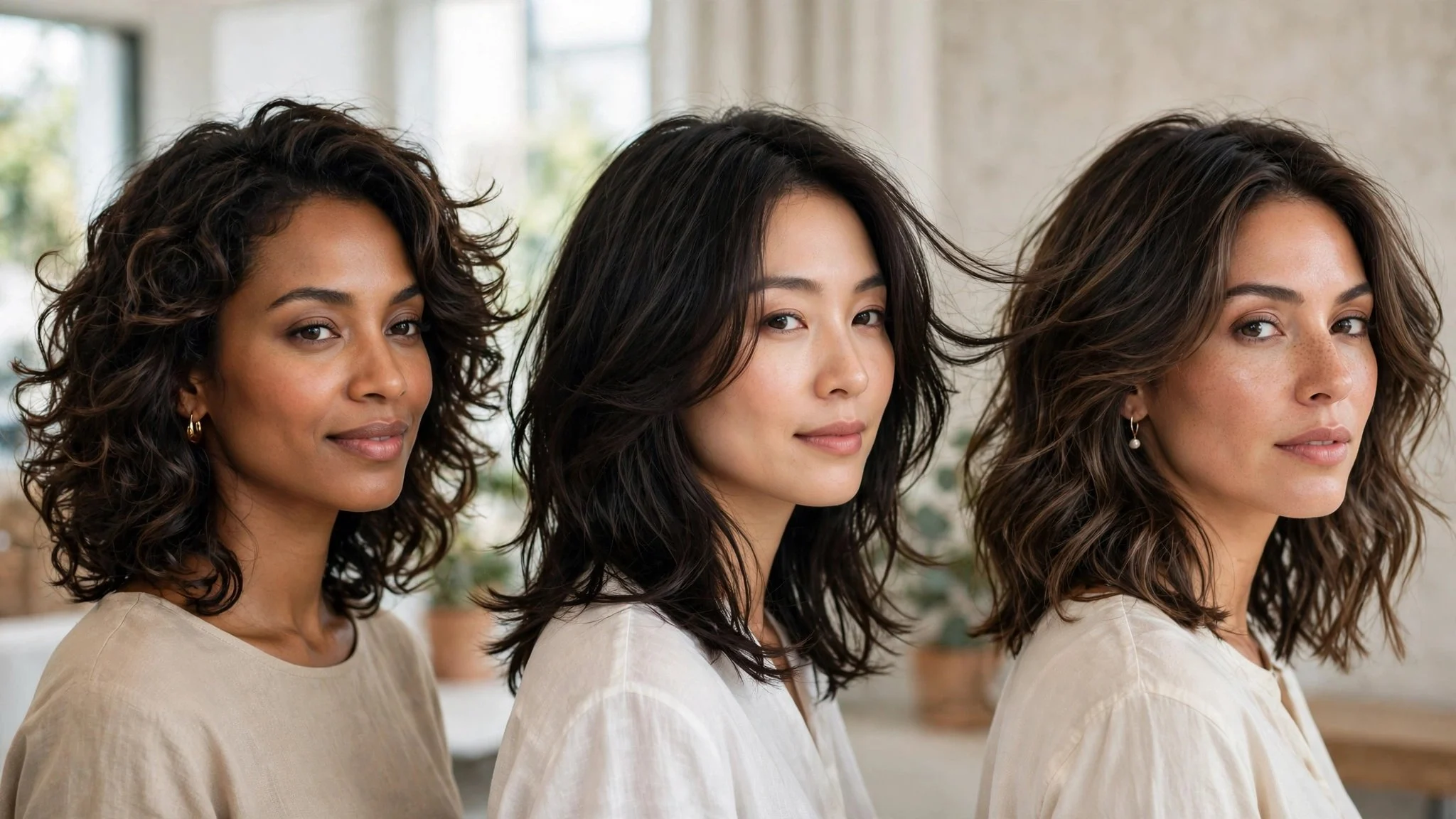
Medium hair has a frustrating habit: it can look full in the morning and flat by lunch, or thick at the ends and lifeless at the roots. Without some shape cut into it, it often just hangs there — too long to bounce, too short to tie up neatly out of the way.
Layers fix that by taking weight out of exactly the right places. Shorter pieces around the face lift the front, longer layers through the back keep the length you grew, and the whole cut moves when you do instead of sitting in one heavy sheet.
Quick answer: if your hair is fine, start with Subtle Layers for Fine Hair; if it is thick, Thick Hair Debulked Layers will take the weight out without the triangle shape; and if your face is round, Classic Face-Framing Layers or Curtain Bangs With Layers open the face up instead of widening it. The full list below explains each one, including who should skip it.
19 Layered Hairstyles for Medium Hair That Actually Move
1. Classic Face-Framing Layers

Face-framing layers are the most flattering kind of layering because they start where your features are. Pieces cut from the cheekbone down open up the face, soften a strong jawline, and give medium hair movement without taking off length. They work on straight, wavy, and lightly curled hair, and they suit oval, round, and square faces alike — the shortest piece just lands in a different spot.
Ask your stylist for face-framing layers starting at the cheekbone or jawline, blended into the length so there is no visible step. At home, it is a five-minute style: blow-dry the front pieces forward with a round brush, then flick them away from the face. Book a tidy-up every eight to ten weeks, or the framing pieces grow out and start to look like a grown-out fringe.
2. Soft U-Cut Layers

The U-cut keeps the perimeter full while the layers do the styling work. From the front it reads as one long, healthy length, but the back curves into a soft U that stops the ends from looking bulky. Thick hair benefits most, because the shape removes weight without short layers poking out at the sides.
Keep the layers long and blended, starting below the chin, and let the U shape do the work — very little daily effort is needed. A quick blow-dry with a paddle brush, about ten minutes, is enough to smooth it, and a trim every ten to twelve weeks keeps the curve even. Skip this one if your hair is very fine: the long layers can make the ends look thinner than they are.
3. Long Feathered Layers

Feathered layers are cut to flick and flip, giving medium hair a light, airy quality. The ends are thinned and angled so they move separately instead of falling in one heavy block, which is why this cut photographs so well. It flatters oval and heart-shaped faces, and it is a kind choice for hair that is starting to thin at the ends.
For the flicked-out finish, blow-dry the ends outward with a medium round brush and a little volumizing mousse — fifteen minutes, tops. The feathered ends need a trim every six to eight weeks or they start to look wispy in the wrong way. If you air-dry your hair most days, be aware this cut looks best with at least a quick blow-dry; left to dry naturally it can fall flat.
4. Curtain Bangs With Layers

Curtain bangs are practically made for layered medium hair. Parted in the center, they fall on either side of the face and melt straight into the layers, so the fringe never looks like a separate piece. Round and square faces benefit the most, because the long, angled bangs narrow the widest part of the face.
Blow-dry the bangs forward and then sweep each side away from the face with a round brush — five minutes while the rest of the hair dries. Because bangs grow fast, plan a fringe trim every three to four weeks and a full cut every eight weeks. Very curly hair can fight the curtain shape, so get the bangs cut longer if your natural curl is strong.
5. Textured Shaggy Layers

Shaggy layering brings edge and volume to medium hair. Choppy, disconnected layers through the crown and ends give the cut a lived-in, piecey texture that actually looks better a little messy. Wavy and thick hair carries it best, and it is one of the few cuts that makes a long face look shorter, because the width at the sides balances length.
This is a wash-and-go cut for wavy hair: scrunch in some salt spray or curl cream and let it air-dry, about five minutes of hands-on time. Straight hair needs a bit more help — a few bends with a flat iron through the mid-lengths. The shag grows out gracefully, so eight to twelve weeks between cuts is fine, but skip it if you need a sleek, polished look for work every day.
6. Blended Invisible Layers

Invisible layers are for people who want movement without an obvious haircut. The layers are cut underneath the top section, so the surface stays smooth and one-length while the hair underneath lifts and swings. It is the safest layered option for fine to medium hair, and it works beautifully on oval and long faces because it adds volume without width.
Tell your stylist the layers should stay internal, with the top layer left long enough to cover them. At home, rough-dry the hair upside down for root lift, then smooth the top with a brush — about ten minutes. A trim every eight to ten weeks keeps the internal layers from peeking out at the ends, and because nothing is thinned at the surface, grow-out is very forgiving.
7. V-Cut Layers With Movement

From behind, the V-cut is the most striking shape in this list. Layers taper down to a point, which makes medium hair look longer than it is while still moving. The shape suits straight and wavy hair best, and it flatters long and oval faces; shorter faces can find the point makes the hair look even longer, so keep the V shallow.
The cut needs very little styling: a straight blow-dry with a paddle brush, ten minutes, shows off the shape. Keep the point tidy with a trim every eight weeks — a ragged V is the one thing that ruins this look. If your hair is curly, be cautious; curls spring up and can turn the neat V into a triangle.
8. Bouncy Blowout Layers

Some cuts are built around the blow-dry, and this is one. Rounded layers with turned-under ends hold a blowout beautifully, and the bounce lasts because the layers support each other instead of collapsing. Medium to thick hair with a natural wave gets the biggest payoff, and the volume suits round and heart-shaped faces.
Section the hair and blow-dry each piece with a large round brush, turning the ends under — allow twenty minutes for the full effect. A light mousse at the roots before drying helps the bounce survive the day. Trim every six to eight weeks: the turned-under ends split early and frizz ruins the smooth finish if you wait too long.
9. Choppy Layers With Middle Part

A center part with choppy layers has the kind of easy cool that never looks overdone. Point-cut ends keep the edges light, and the symmetry of the middle part suits oval and heart-shaped faces. Fine hair likes this one too, because the choppy ends make the hair look thicker than a blunt cut would.
Wear it mostly natural — a little texturizing spray scrunched through damp hair, five minutes, is all it needs. For a tidier version, smooth the top with a flat iron and flick the ends out. Choppy layers grow out evenly, so ten to twelve weeks between trims is realistic. If your hair is very thick, get the choppiness kept at the ends rather than through the bulk, or the shape can go wide.
10. Rounded Layers With Side Sweep

Rounded layers cut in a curved shape feel polished with very little effort. The longer front sweeps across the forehead and blends into the layers, which softens square and heart-shaped faces and covers a high forehead gracefully. Straight and slightly wavy hair shows the round shape best.
Blow-dry the front sweep over to one side with a round brush — the whole style takes about ten minutes. The sweep is the part that grows out fastest, so a trim every seven to eight weeks keeps the shape. This cut is less suited to very curly hair, where the sweep can shrink up and lose its soft curve.
11. Wavy Layers With Balayage

Colour and cut work together here: balayage is painted onto the outer layers and the ends, so the lighter pieces move exactly where the layers do. The result is depth without hard lines, and the grow-out is soft because there is no harsh root. Wavy, medium to thick hair shows the effect best, and the sun-kissed pieces flatter warm skin tones in particular.
To keep the colour and the cut both looking fresh, use a colour-safe shampoo and a weekly deep-conditioning mask — the layers need the ends hydrated or they frizz. Style by scrunching with curl cream and diffusing on low heat, about ten minutes. Plan a balayage refresh every twelve weeks and a layer trim every eight, and avoid over-highlighting fine hair, which can look see-through at the ends if the balayage is too heavy.
12. Subtle Layers For Fine Hair

Fine hair needs layers, but it needs the right ones. One or two very long layers keep the cut from sitting flat while the blunt perimeter protects the ends from looking thin. This is the best pick in the whole list for fine hair — full at the bottom, with just enough movement to hold a style.
Blow-dry with a volumizing mousse and a round brush, lifting at the roots, and the layers will hold their shape for days — ten minutes in the morning. Trim every six to eight weeks: fine hair shows split ends fast, and blunt ends are exactly what keep this cut looking thick. Stay away from short, choppy layers or heavy thinning here; they take away the very density this cut protects.
13. Thick Hair Debulked Layers

Thick hair can turn into a triangle without the right layers, and this cut is the fix. Interior layers and careful thinning take out bulk from the mid-lengths, so the hair falls straight down instead of widening at the ends. The shape is a lifesaver after growing out a bob, and it keeps heavy hair from eating up all the drying time.
This is the thick-hair pick in the Quick answer above, and it earns the spot. Blow-drying takes about fifteen minutes, but a good debulking means the hair air-dries straighter too. Go back every eight to ten weeks for the interior layers to be re-done as the hair grows. Fine hair should avoid this one entirely — removing weight you don’t have only leaves the ends wispy.
14. Layers With Soft Curls
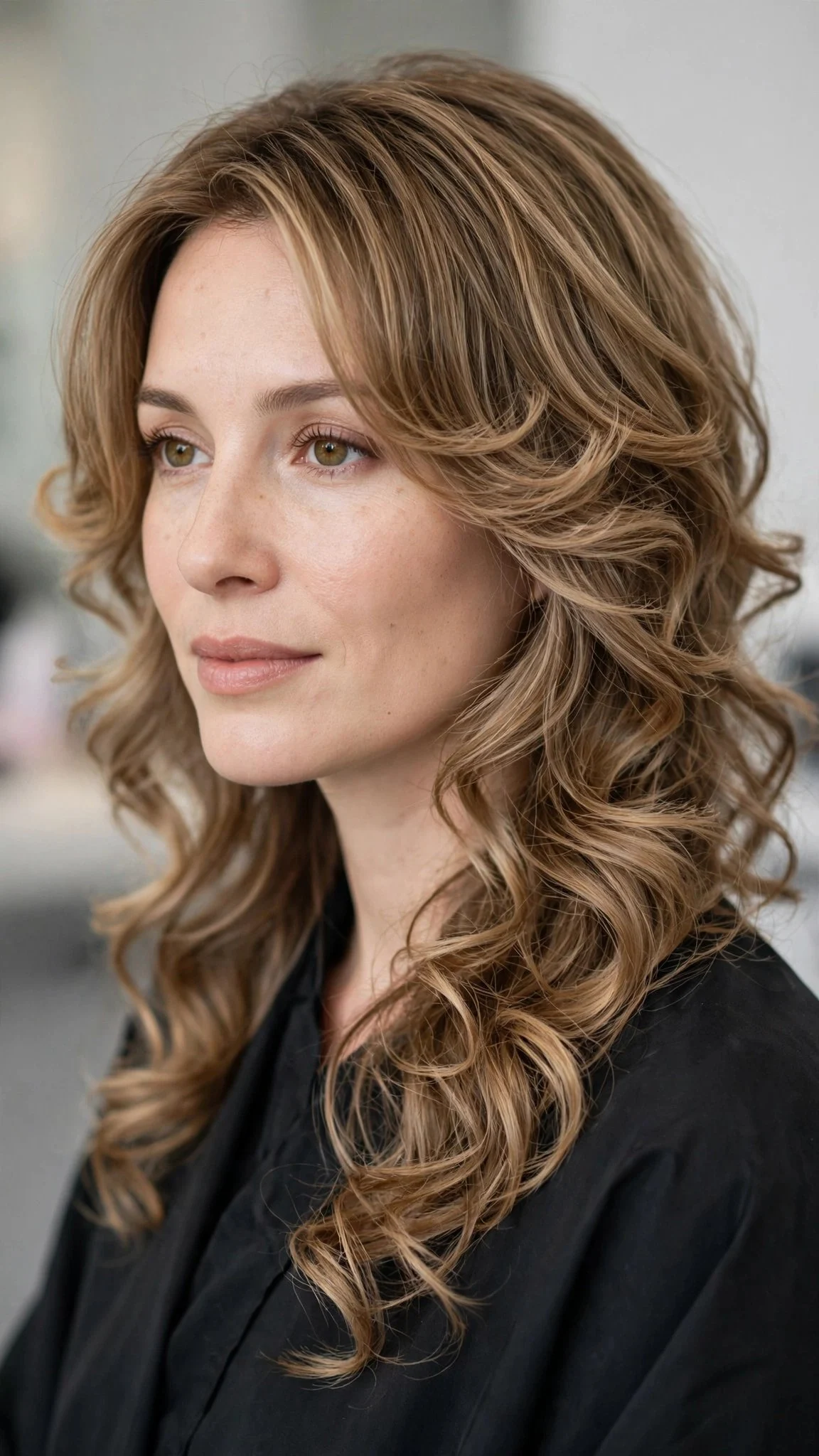
Loose curls and layers are natural partners. Long layers give each curl room to form, and the shape holds because there is not too much weight pulling the curls straight. Medium-textured hair with a natural wave gets this look with least effort, and the curls soften a long or angular face.
Curl the hair away from the face in large sections with a wide-barrel iron, then run a wide-tooth comb through once the curls cool — fifteen minutes for the whole head. A light hairspray, not a strong one, keeps the curls soft instead of stiff. Trim the layers every eight weeks; once the ends get heavy the curls drop out. If you never heat-style and your hair is pin straight, this is a harder look to maintain.
15. Piecey Layers With Highlights

Piecey layers are cut to separate into distinct strands, and highlights woven through them make every piece visible. The result is a fun, dimensional texture that suits medium hair because the length gives the pieces somewhere to go. Oval and heart-shaped faces carry it well, and it is a good way to add interest to hair that feels one-note.
Work a pea-sized amount of texture paste through the ends of dry hair and pull the pieces apart — two minutes, done. The highlights are the high-maintenance part: they need a colour-safe shampoo and a tone or gloss refresh every eight weeks, while the layers themselves can go ten to twelve weeks between trims. Skip heavy piecey cutting if your hair is very fine and straight; the pieces can separate too much and show the scalp.
16. Long Layers With Wispy Ends

Wispy ends give medium hair a soft, romantic finish. The layers taper to feathery points instead of a blunt edge, so even very long medium hair moves when you turn your head. It suits straight and wavy hair best, and the lightness at the ends can make thick hair feel less heavy without losing its length.
For a wispy finish, blow-dry with a round brush and very little product — the ends need to stay light, so skip heavy creams. Ten minutes is enough. The wispy ends are the first thing to look scraggly, so trim every six to eight weeks. If your hair is fine and you want the ends to look fuller, this is one to pass on; the feathering thins out exactly where fine hair is already thin.
17. Face-Framing Layers With Money Piece

A money piece takes face-framing layers to the next level. The two lighter pieces at the front brighten the face instantly, and because they sit inside the layers, the colour grows out softly rather than in a hard line. It flatters oval, round, and heart-shaped faces, and it is the quickest way to make a familiar cut feel new.
Colour-wise, the money piece needs only a root touch-up every six to eight weeks, and the layers a trim every eight to ten. Style the front pieces by blow-drying them forward with a round brush, then tucking them behind the ears or letting them fall — five minutes. The brightness can turn brassy on dark hair without a purple shampoo used once a week, so factor that in before you commit.
18. Layers With Voluminous Crown

Shorter layers at the crown create lift that lasts all day. The top pieces are cut shorter than the lengths underneath, so the crown never lies flat, and the added height balances a round face nicely. Thick and medium hair gets the most volume from this cut, while the long layers underneath keep plenty of length.
Blow-dry the crown with a round brush, lifting each section up and back, and set it with a shot of cool air — fifteen minutes for the full routine, or five if you only do the crown. A volumizing mousse at the roots makes the lift hold longer. Trim every seven to nine weeks, or the crown layers grow heavy and the lift disappears. Very fine hair can struggle here: too much short layering at the top can make the crown look thin rather than full.
19. Sleek Straight Layers

Sleek, straight layers are the minimalist’s dream cut. Long, clean layers and a precise perimeter make the hair fall glassy and straight, and the lack of fuss is the whole point. Straight, healthy hair is where this cut shines, and the sharp lines suit oval and long faces.
Straighten in sections with a flat iron over heat protectant — fifteen minutes — and finish with a drop of serum on the ends, not the roots. Because the style shows every split end, a trim every six to eight weeks is non-negotiable. Wavy or frizzy hair can still wear it, but the daily straightening takes longer and the style will not survive humidity without an anti-frizz product.
Layers That Love Your Length
Medium hair is the most versatile length there is, and layers are what unlock it. Whether you need volume, movement, or just a shape that styles itself, there is a layering technique on this list that does the job. The trick is matching the layer to your texture and being specific with your stylist about what you want the hair to do.
Save your favorites, book the appointment, and enjoy the swish. Good layers make every day feel like a fresh blowout.
What to tell your stylist
- Face-framing layers: the shortest piece starts at your cheekbone or jawline, then blends into the length — no blunt step.
- For thick hair: interior layers that take weight out of the mid-lengths, so the hair falls straight instead of widening at the ends.
- For fine hair: one or two long, subtle layers only, with the ends kept blunt so the hair still looks thick.
- For the shape: a U-cut or V-cut perimeter if you want length with movement, or a soft, rounded finish if you want bounce.
Frequently Asked Questions
Do layers make medium hair look thinner?
They can, if they are cut too short or thinned too much — that is why fine hair should only have one or two long layers with blunt ends. Cut the right way, layers actually make medium hair look fuller, because the shorter pieces lift the roots and the ends move instead of hanging flat.
How often should I trim layered medium hair?
Every six to eight weeks for most layered cuts, and every eight to ten weeks if the layers are long and subtle. Short, choppy layers and rounded shapes lose their edges fastest, so book those closer to six weeks, and ask for a dusting of the ends rather than a full re-cut.
Are layers better than no layers for fine hair?
A few long layers are better, because a single-length cut on fine hair can look heavy at the ends and flat at the roots. What fine hair should avoid is a lot of short layers or heavy thinning, which removes the bulk that makes the ends look thick. One or two subtle layers is the sweet spot.
Do layered cuts work on curly hair?
Yes, if the layers are cut longer than you think you need — curls spring up as they dry, so layers cut for straight hair end up much shorter than expected. It also helps to cut curly hair dry or in its natural curl pattern. Very short layers can make the shape go wide, so keep the shortest layer below the jawline.
How do I style layered medium hair at home?
Blow-dry with a round brush for smoothness and shape, lifting the roots as you go — most of the styles in this list take ten to fifteen minutes that way. For a faster morning, scrunch a little texturizing spray into damp hair and let the layers fall where they want. A light serum on the ends keeps everything from looking frizzy.
Sarah Mark
- Content about haircuts, styles, ideas, and trends.
- Keeping it real and easy to follow.
- Helping you find a look.


The Conversation
Your voice matters. Discussions are moderated for civility.