22 Face Framing Layers for Fine Hair That Build Soft Volume
By 
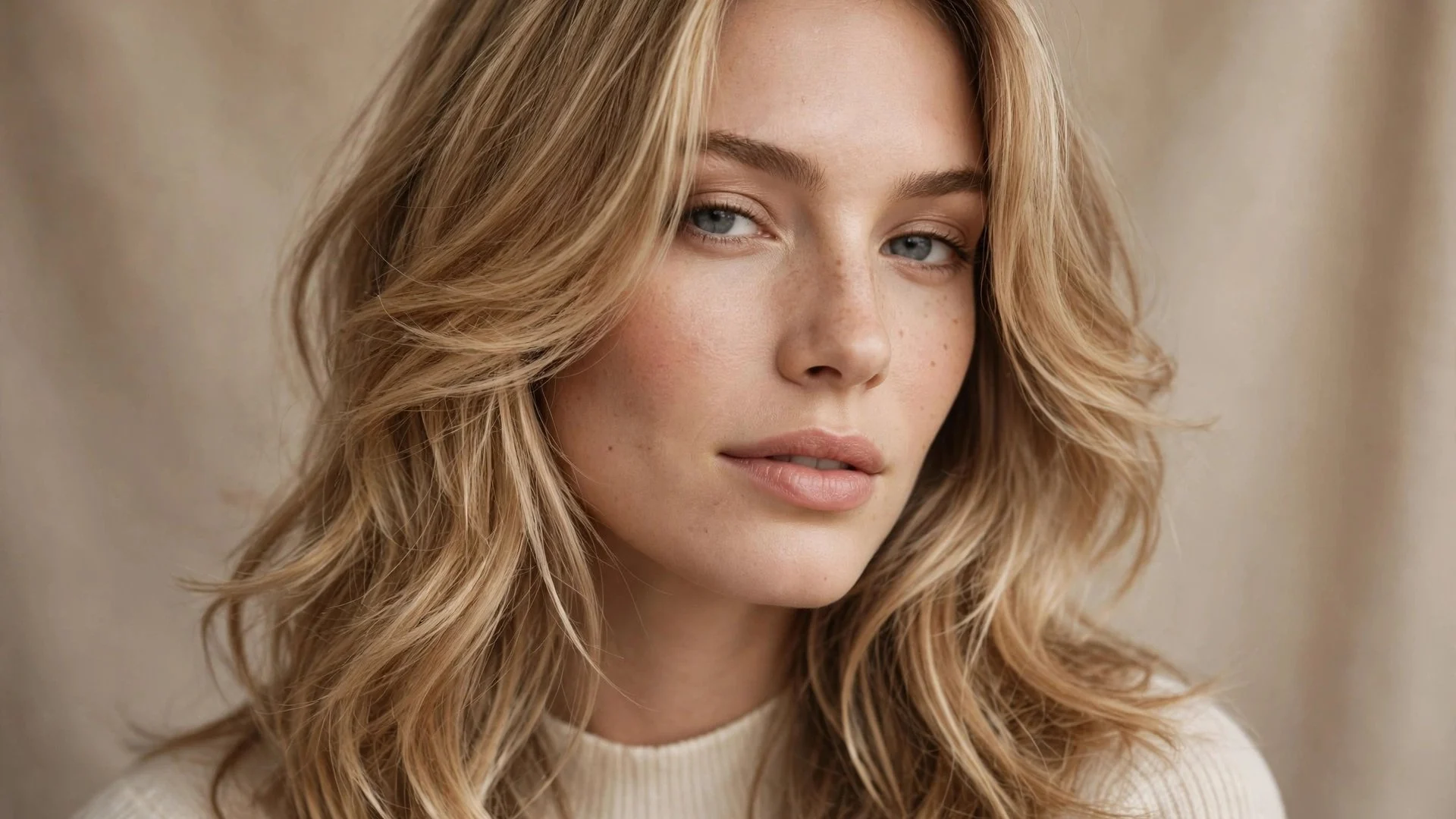
What I like about face framing layers is how they do the heavy lifting without taking any length away. If your hair is fine, you already know the struggle: one-length cuts fall flat, but chopping layers everywhere can leave the ends looking wispy. The right front layers fix both problems, giving you movement around your face and the illusion of fullness right where everyone looks.
I put together these 22 ideas with fine hair specifically in mind. Every one of them keeps your ends looking thick while adding shape, bounce, and that soft, lived-in volume around the cheeks, jaw, and chin. Scroll through, screenshot your favorites, and take the exact wording to your next appointment.
1. Soft Curtain Fringe Layers
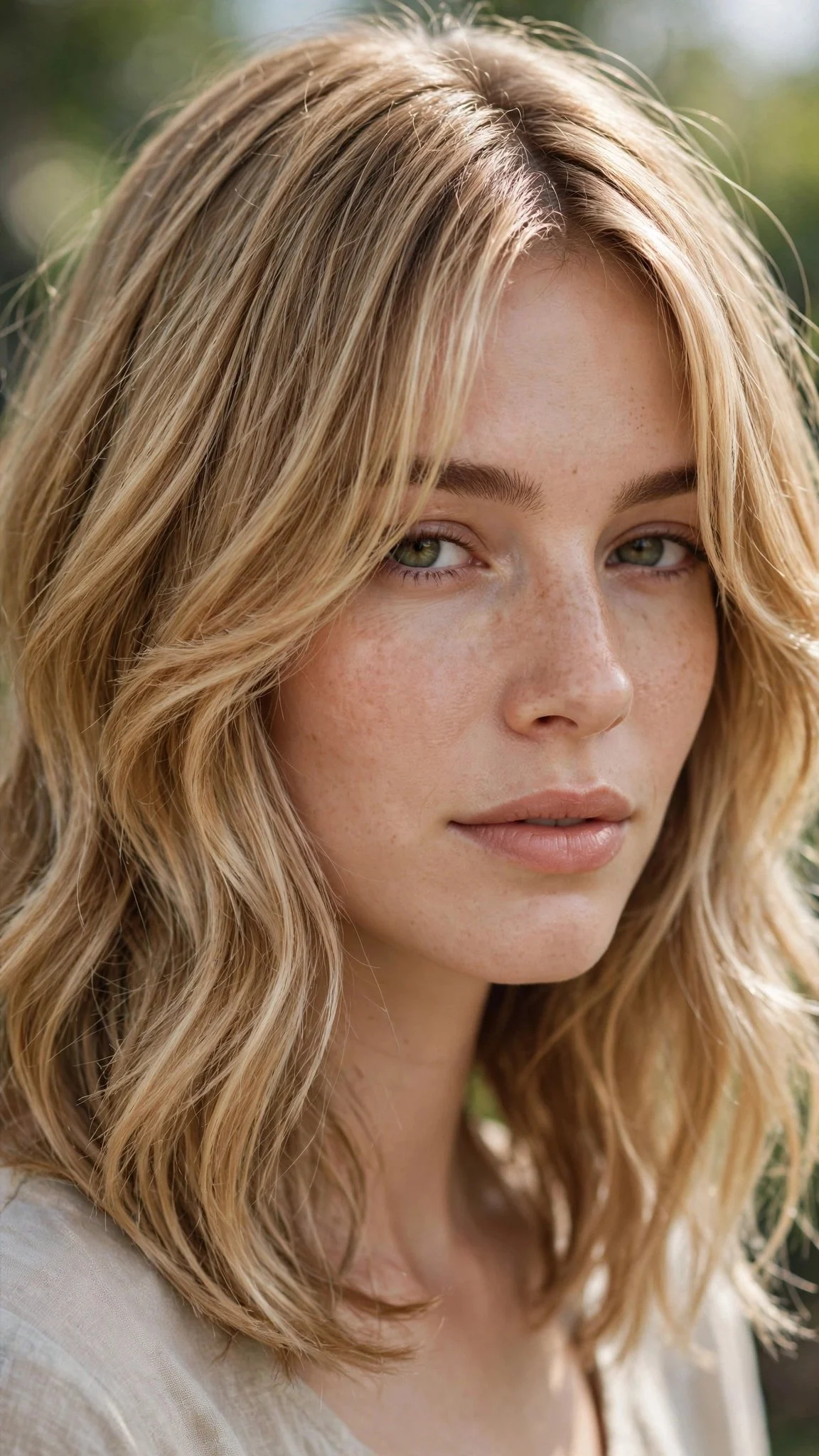
Curtain fringe layers part in the middle and melt into the rest of your hair, framing the cheekbones with soft, feathered movement. For fine hair, keeping the fringe pieces slightly longer (brushing the cheekbones rather than the forehead) adds shape without removing the density you need at the front.
Ask your stylist for face framing that starts at cheekbone level and connects to your longest layer. At home, blow-dry the fringe pieces forward and away from the face with a round brush, then finish with a light texturizing spray at the roots for airy volume.
2. Chin-Skimming Framers
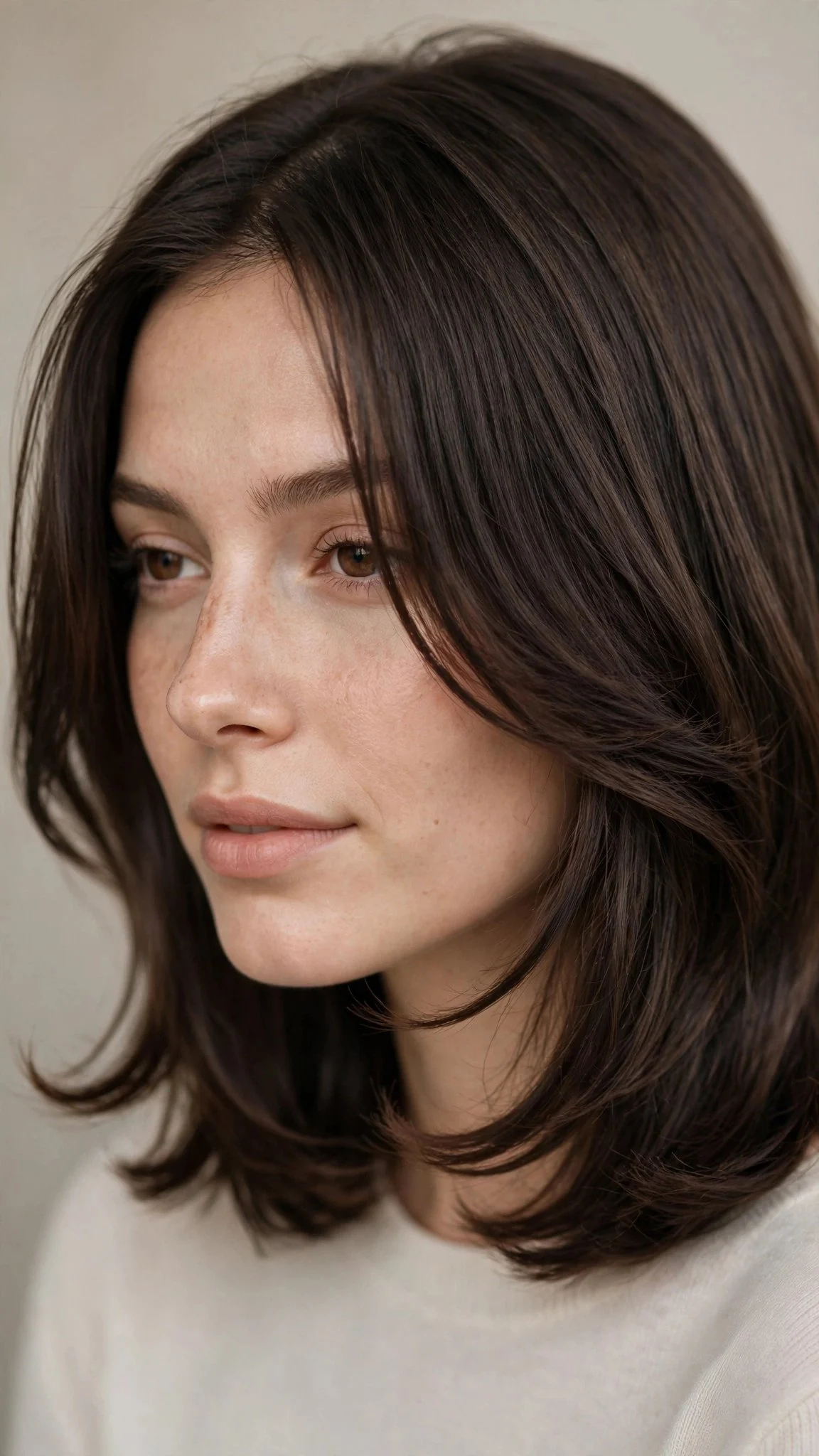
These face framing pieces are cut to skim right along the chin, drawing attention to the jawline and adding instant polish to fine hair. The shorter front pieces create the illusion of a thicker perimeter because they fall forward and visually fill in the sides of the face.
Ask your stylist for the shortest face framing piece to land exactly at the chin, blended softly into the length behind. To style, curl just the front two sections away from your face with a 1.25-inch iron and mist with a flexible-hold hairspray.
3. Wispy Cheekbone Layers
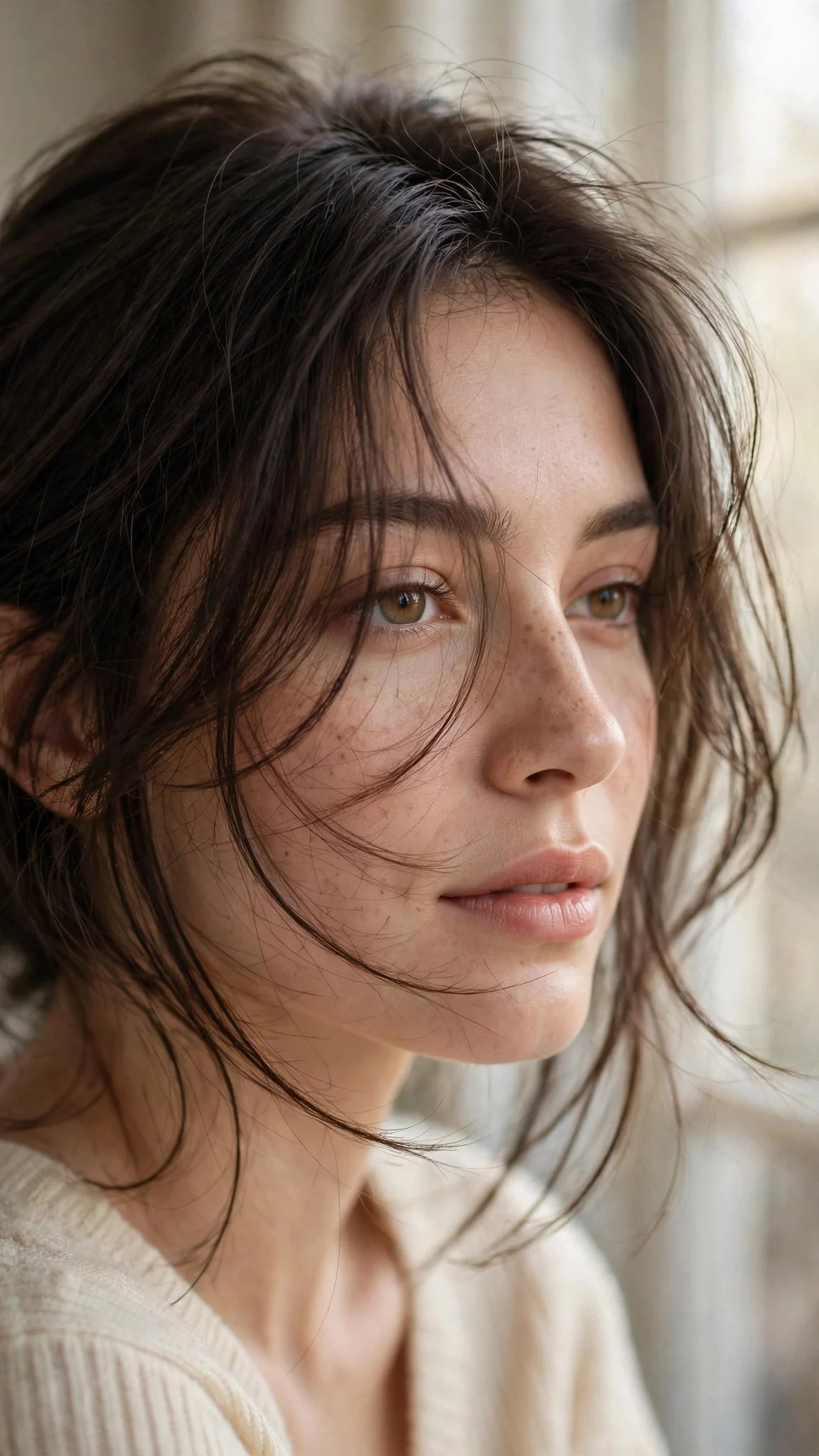
Ultra-light, feathered pieces cut to float across the cheekbones give fine hair a delicate, romantic softness. Because these layers are point-cut for wispy ends, they blend seamlessly and never create a harsh shelf between the front and the back.
Ask your stylist for point-cut, feathered framing that hits the cheekbones and fades into the length. Keep these pieces healthy with a weekly hydrating mask on the ends only, and style with a touch of dry texture spray rather than heavy creams that flatten fine hair.
4. Shoulder-Grazing Swoop Layers
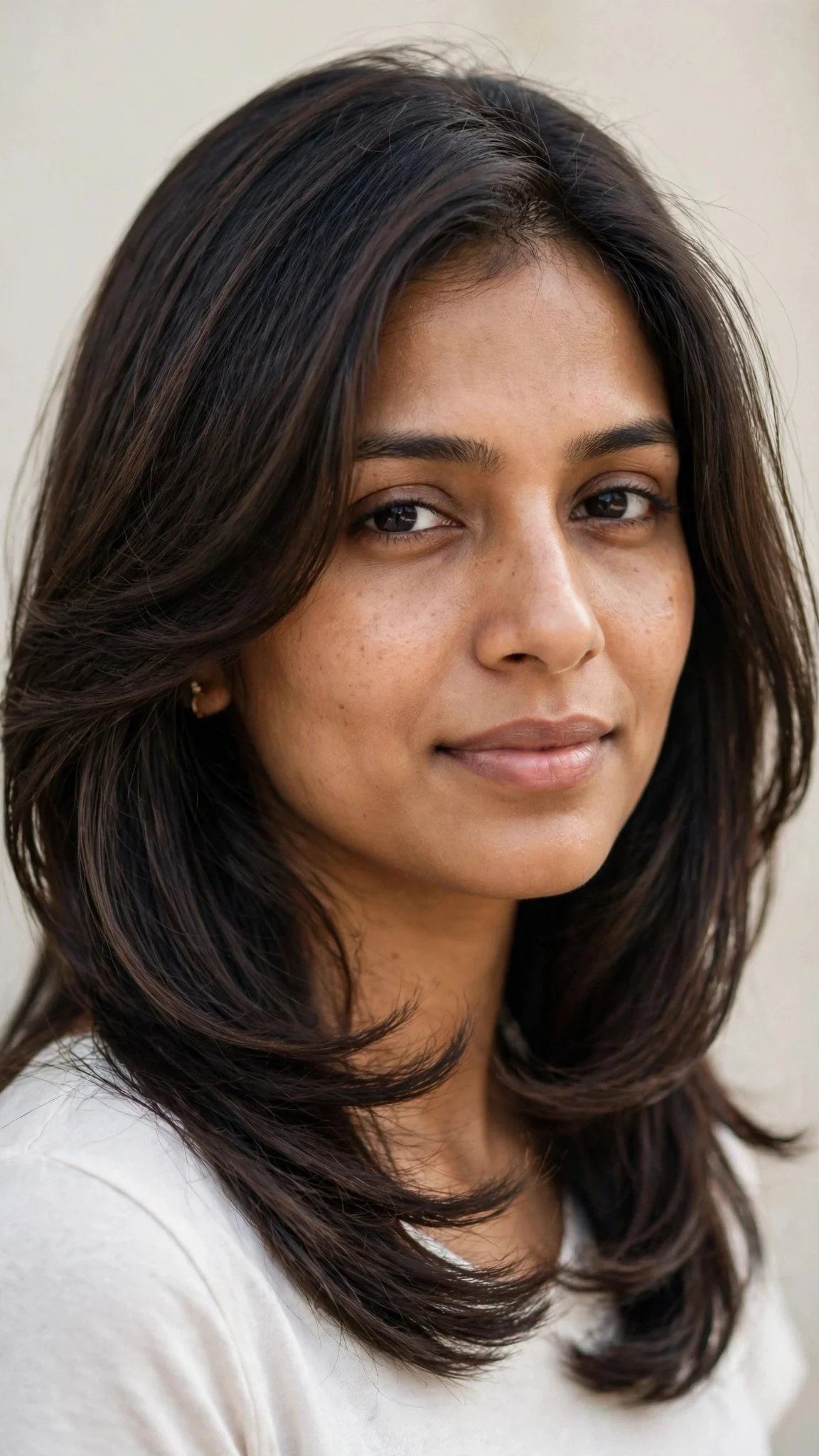
Long, swooping face framing that grazes the shoulders brings drama to fine hair without sacrificing fullness. The pieces curve gently inward toward the neck, which makes the hair look denser and gives every turn of your head that glossy, swishy movement.
Ask your stylist for long front layers that fall just below the collarbone, cut on a curve so they tuck toward the neck. Blow-dry with a large round brush, rolling the front pieces under for that signature swoop, and finish with a shine serum on the ends.
5. Blunt Ends with Soft Front Layers
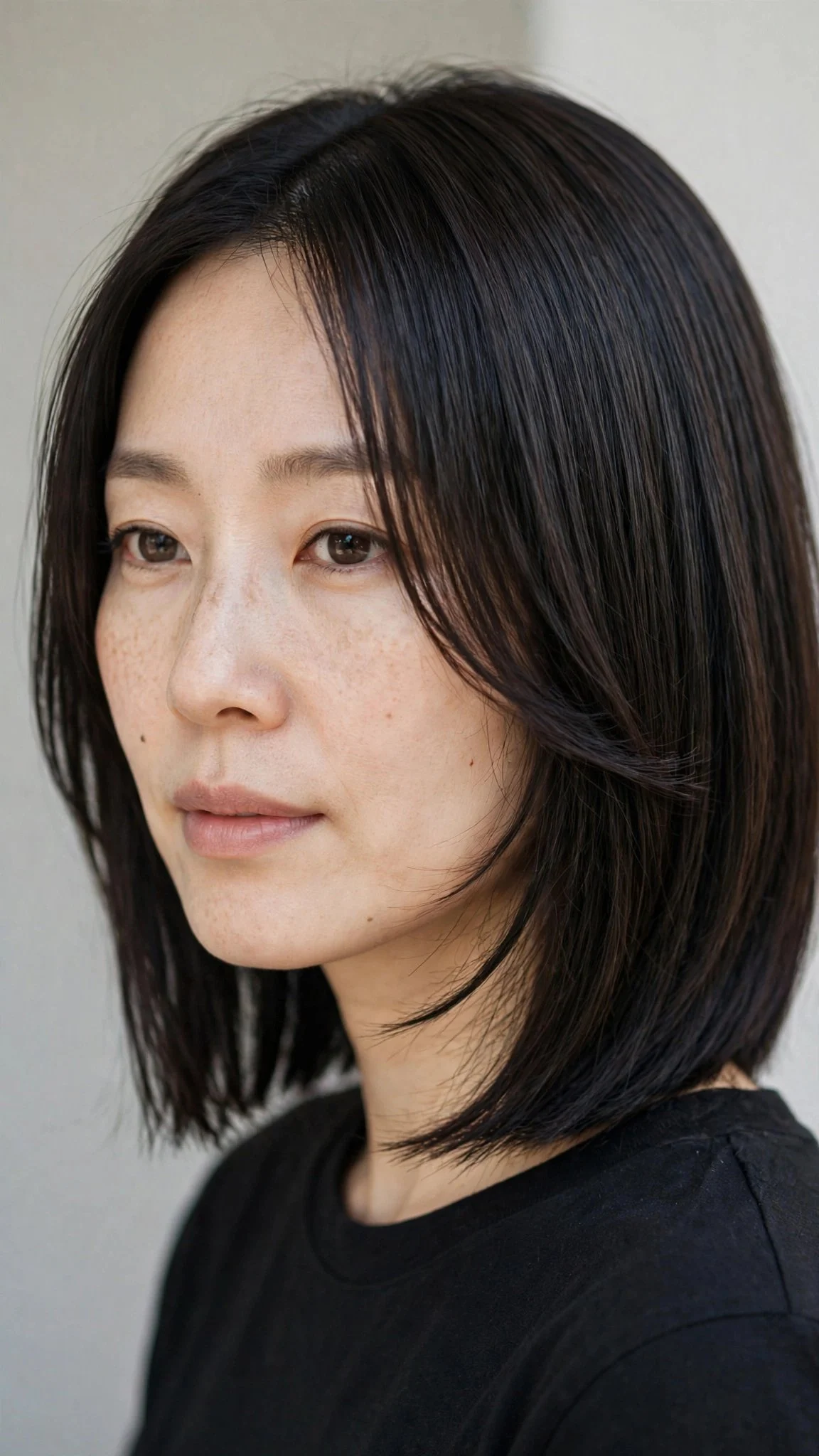
Keeping the back perimeter blunt while adding softness only around the face is one of the smartest moves for fine hair. You keep maximum thickness at the bottom where it counts, and the front layers add all the movement and face-flattering shape you need.
Ask your stylist to keep the baseline blunt and clean, adding face framing that begins at the jaw and blends down. This cut air-dries beautifully, but for extra polish, smooth the front pieces with a flat brush and a blow dryer for a glossy finish.
6. Long Butterfly Layers
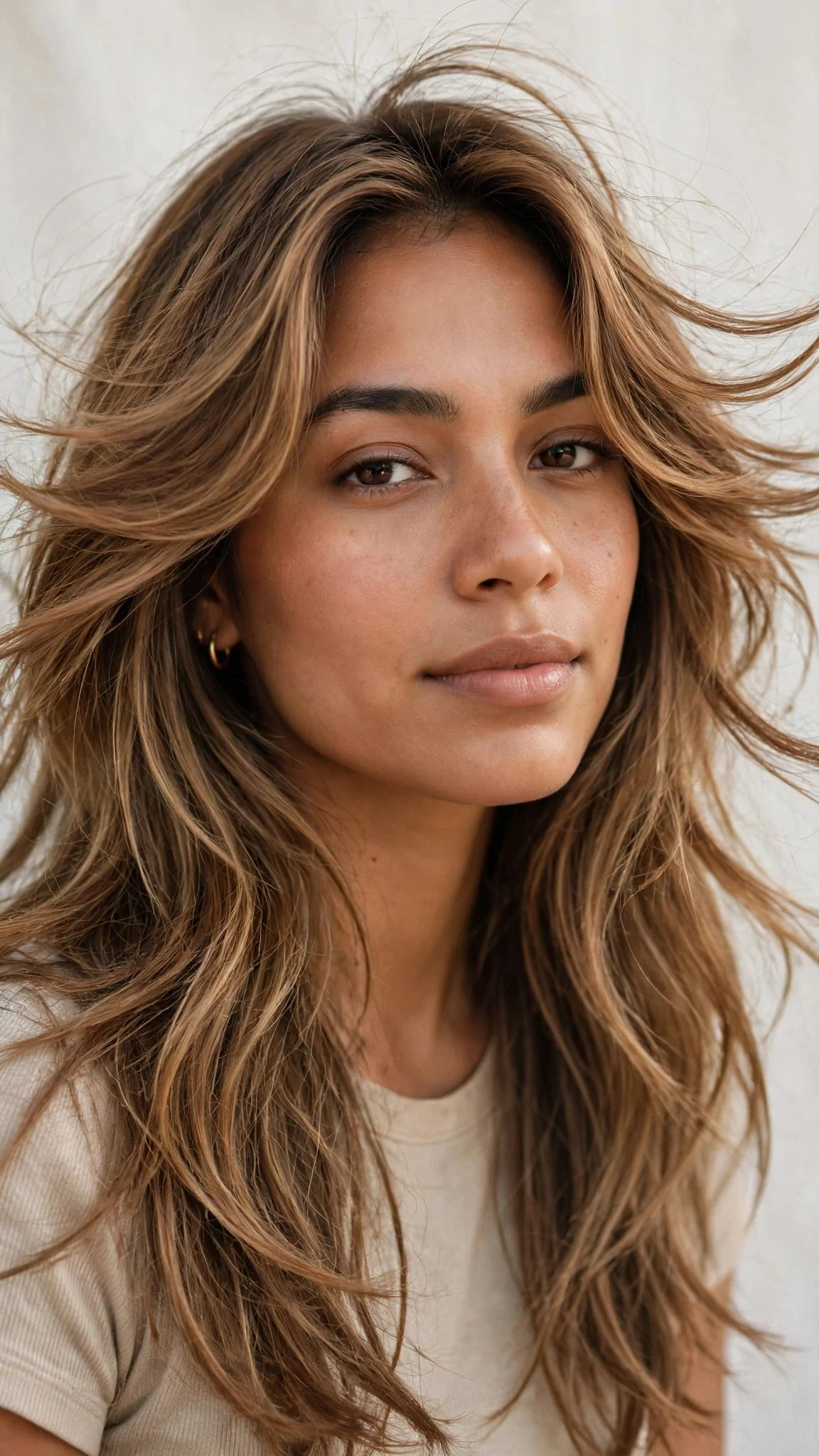
Butterfly layers place shorter, face-framing pieces on top that flutter away from the face while the long length stays untouched underneath. On fine hair, this creates the illusion of two full layers of hair, instantly doubling the visual volume.
Ask your stylist for short face-framing layers (chin to collarbone) that disconnect slightly from the longer underneath layers. Flip the top pieces outward with a round brush for that winged butterfly effect, and use volumizing mousse at the crown before drying.
7. Textured Collarbone Layers
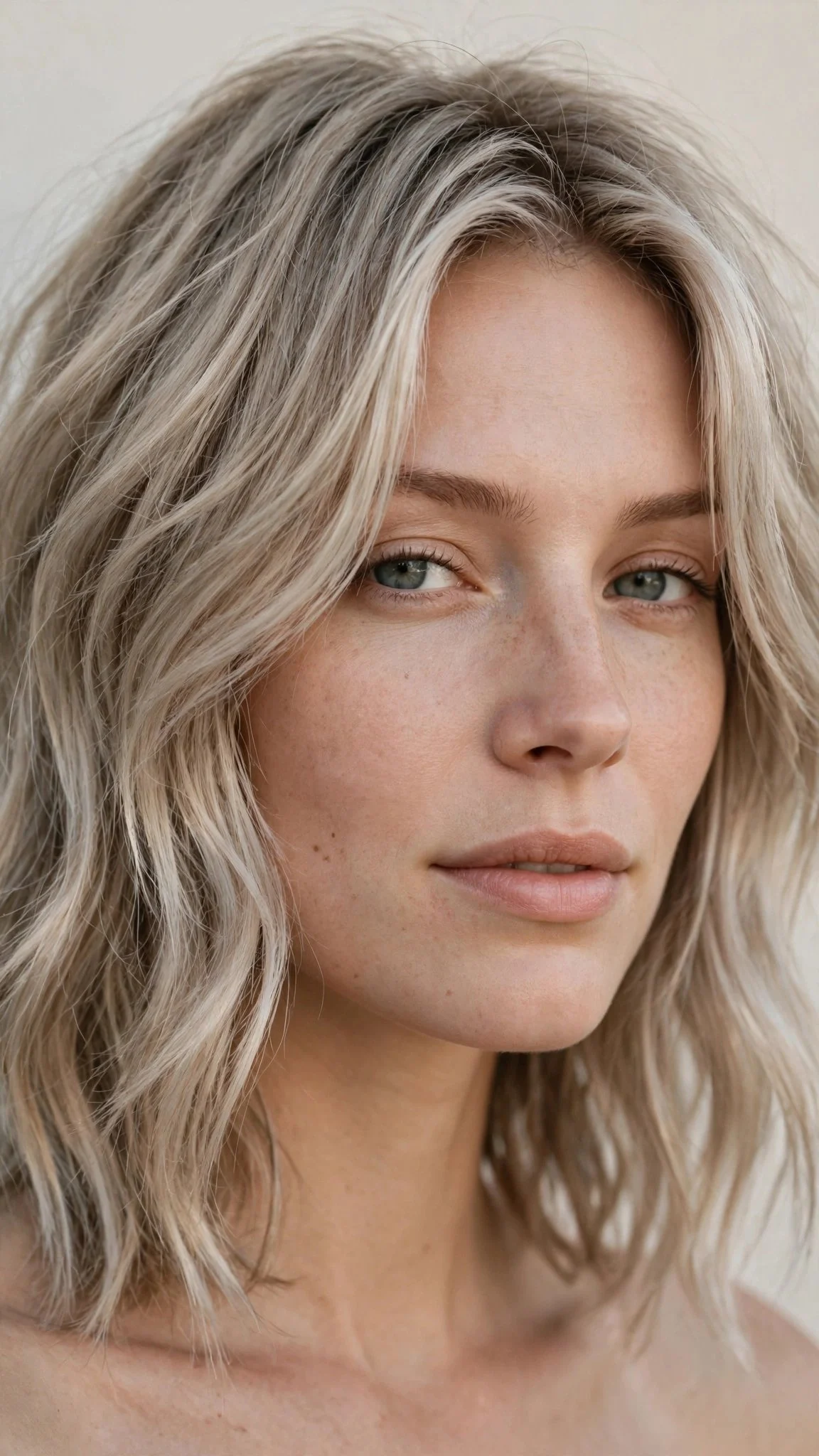
A collarbone-length cut with textured face framing hits the sweet spot for fine hair: long enough to feel feminine, short enough to hold volume. The textured, piece-y front layers keep the style from looking flat or one-dimensional.
Ask your stylist for a collarbone cut with face framing sliced in for texture and separation. Scrunch a pea-sized amount of lightweight styling cream into the front pieces while damp, then diffuse or air-dry for effortless texture.
8. Feathered Jawline Framing
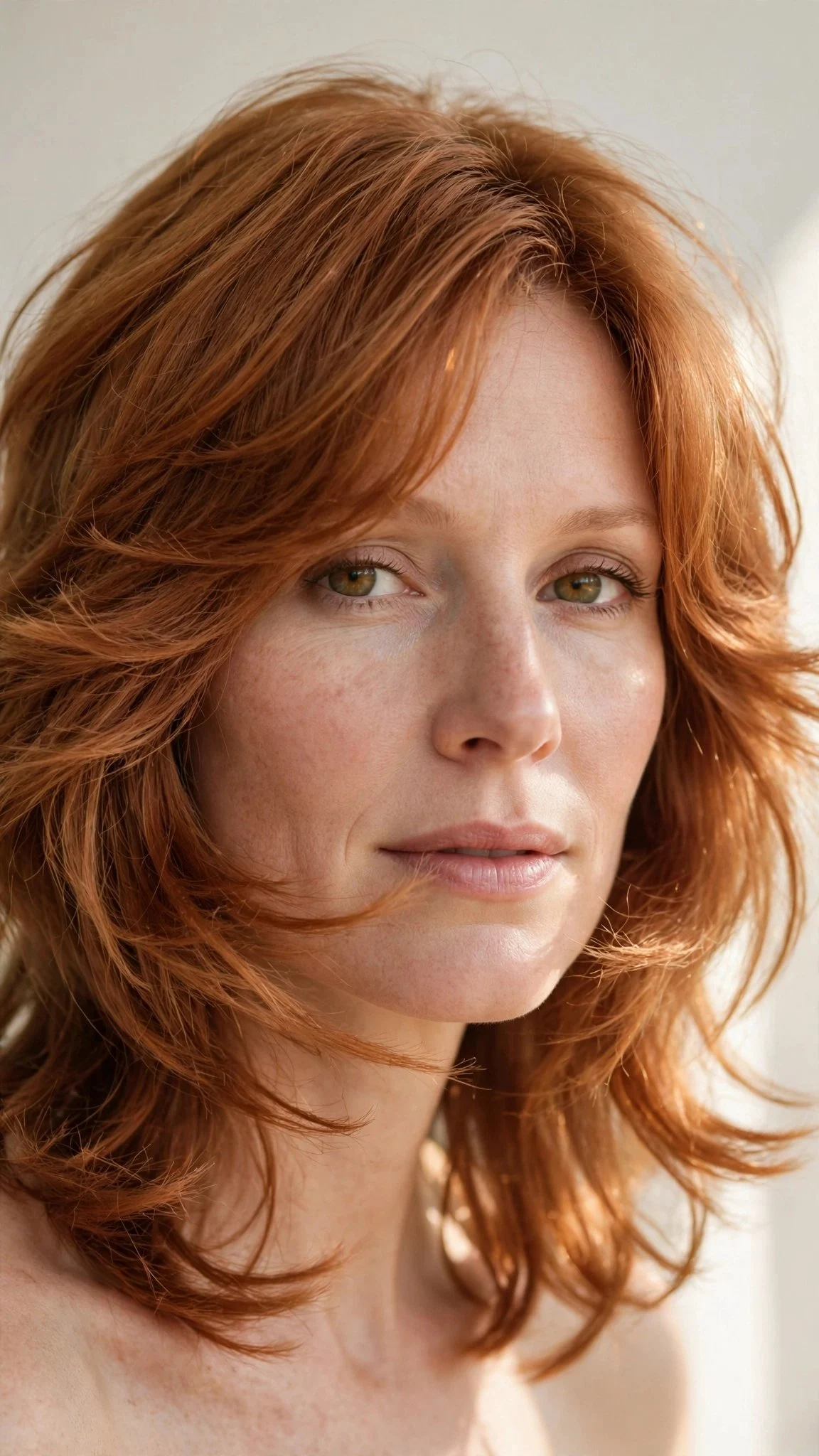
Feathered pieces cut to flick along the jawline give fine hair a soft, seventies-inspired swing. The feathering technique thins the very ends just slightly, so the layers move and layer over each other instead of sticking out stiffly.
Ask your stylist for feathered face framing starting at the jawline with soft, flicked ends. Blow-dry the front sections outward and away from the face using a medium round brush to emphasize the feathered flip, then set with a cool shot.
9. Wispy Bangs with Longer Framers
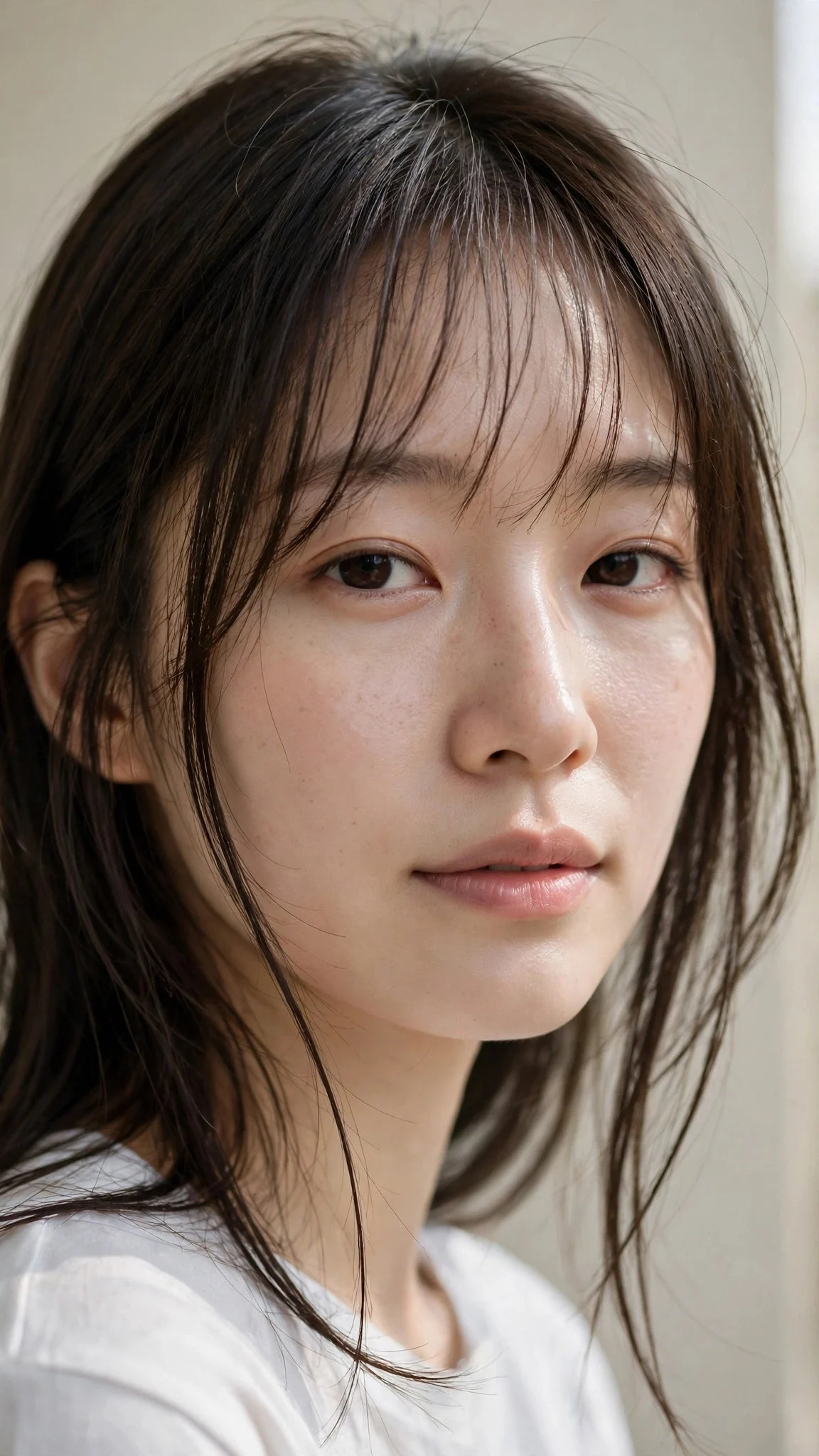
Pairing wispy, see-through bangs with longer face-framing pieces gives fine hair a fuller forehead area and graceful length around the cheeks. The bangs take almost no hair from the rest of your style, so density stays intact everywhere else.
Ask your stylist for soft, wispy bangs that skim the brows, with face framing continuing down past the jawline. Style bangs with a small round brush and minimal product, since heavy styling creams will separate wispy bangs into stringy pieces.
10. Lived-In Long Layers
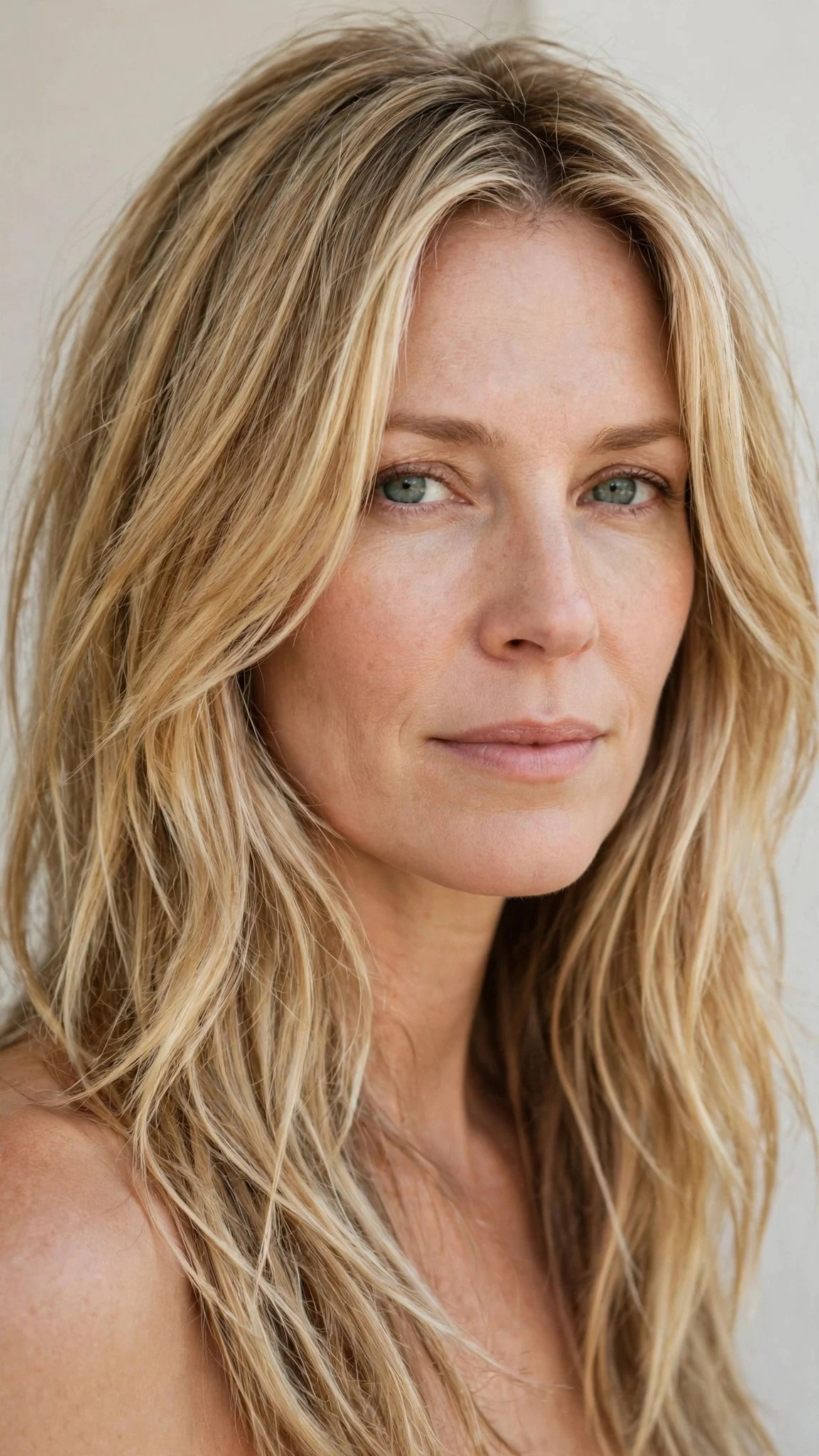
Long, grown-out-feeling layers with relaxed face framing are perfect if you want fine hair to look naturally full rather than obviously styled. The framing is subtle and blended, so it enhances your bone structure without screaming haircut.
Ask your stylist for long, seamless layers with face framing that starts around the chin and melts invisibly into the length. This style thrives on air-drying; apply a salt-free wave spray to damp hair, twist the front pieces loosely, and let them dry for soft bends.
11. Flipped-Out Face Framers
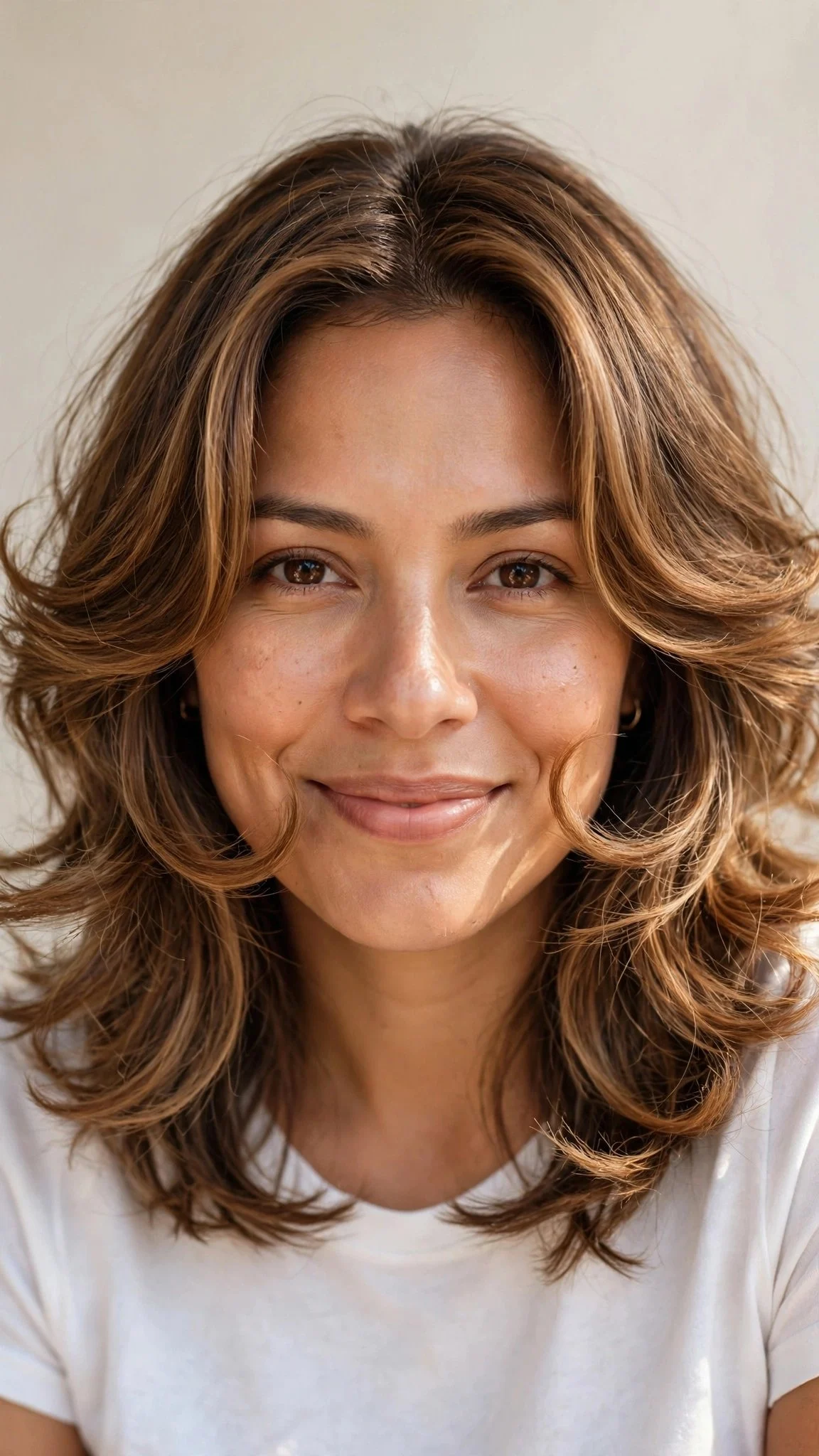
Face framing pieces flipped outward at the ends create playful, bouncy energy that makes fine hair look instantly thicker. The outward flick catches the light on the ends, adding dimension and movement exactly where the eye lands first.
Ask your stylist for face framing cut to flip, with ends texturized for an easy outward bend. Use a flat iron to flip just the front sections outward, holding each piece for only a few seconds, then rake through with your fingers for a soft finish.
12. Bottleneck Bangs and Layers
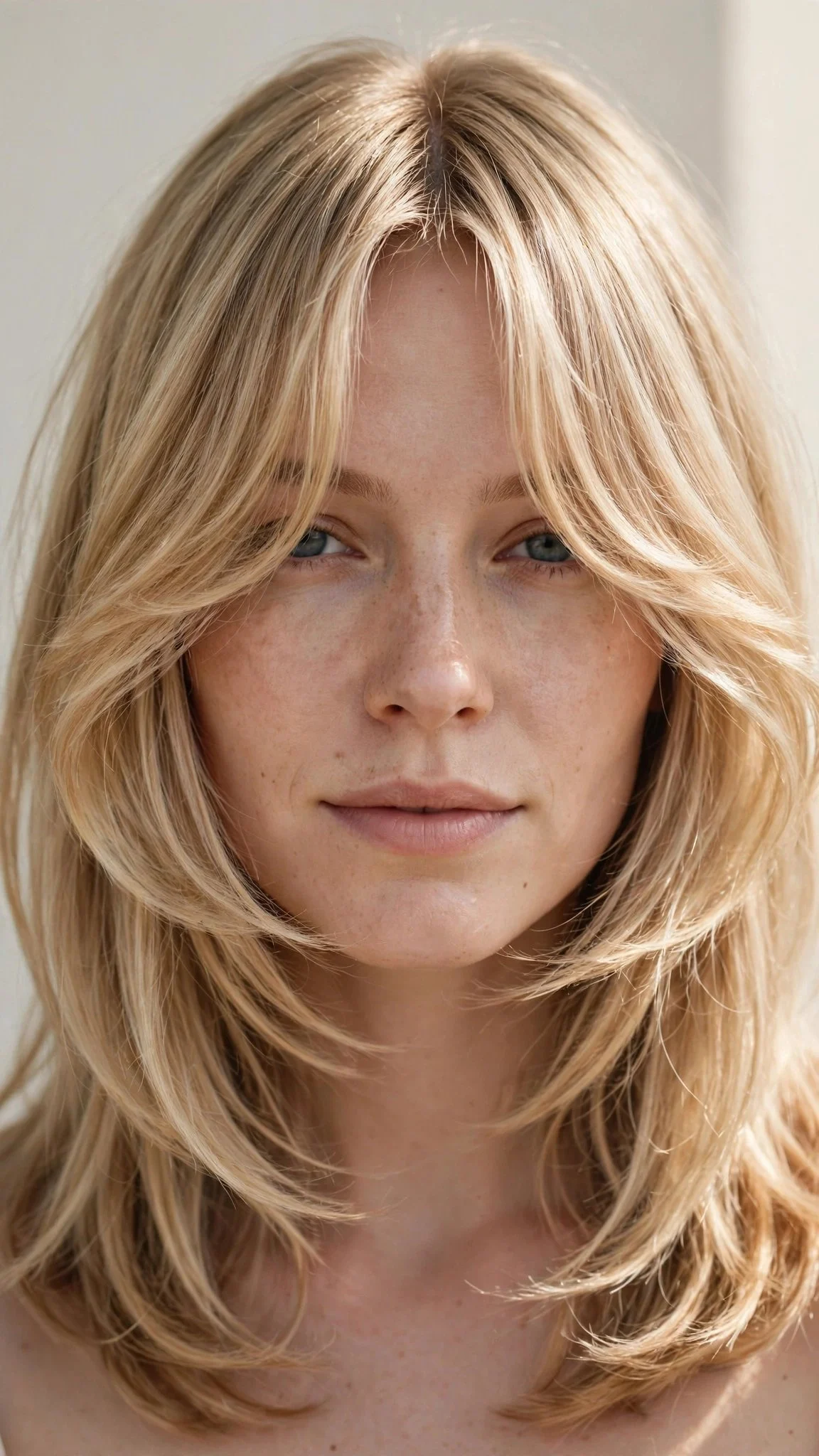
Bottleneck bangs are narrow at the top and widen through the cheeks, flowing directly into face-framing layers. For fine hair, this shape adds width and fullness across the face while keeping the actual bang section small and manageable.
Ask your stylist for bottleneck bangs that open up around the cheekbones and connect into longer face framing. Style by blow-drying the bangs down and forward first, then sweeping the sides back with a round brush for that curved, bottle-neck shape.
13. Sleek Contoured Layers
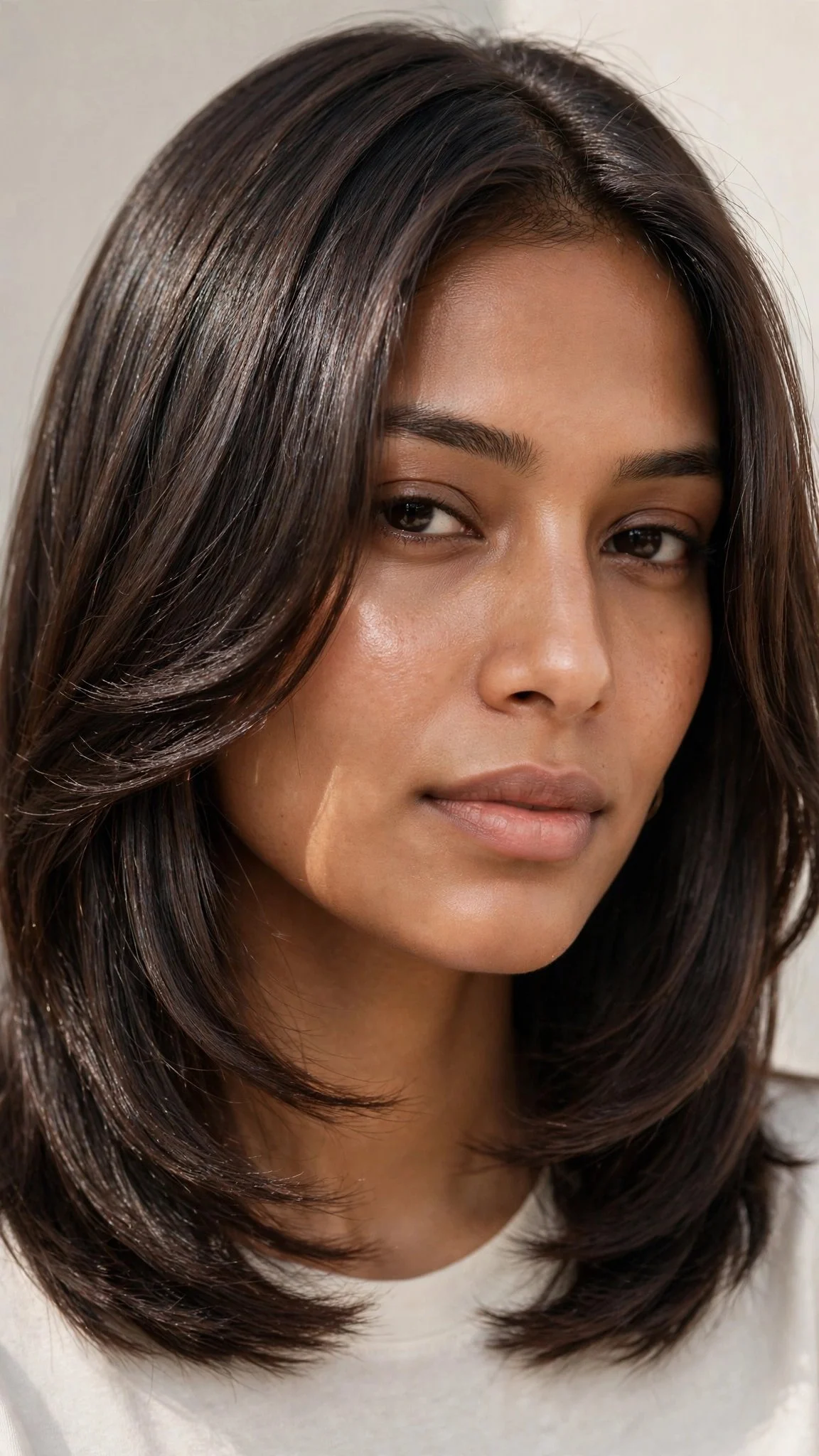
Sleek, contoured face framing follows the natural curves of your face like a frame around a painting. On fine hair, this polished look reads expensive and intentional, with smooth, glossy pieces that highlight the cheekbones and jawline.
Ask your stylist for precise, curved face framing that hugs the cheeks and jaw. Achieve the sleek finish with a paddle brush and blow dryer, smoothing a drop of anti-frizz serum through the front sections while the hair is still damp.
14. Choppy Collarbone Cut
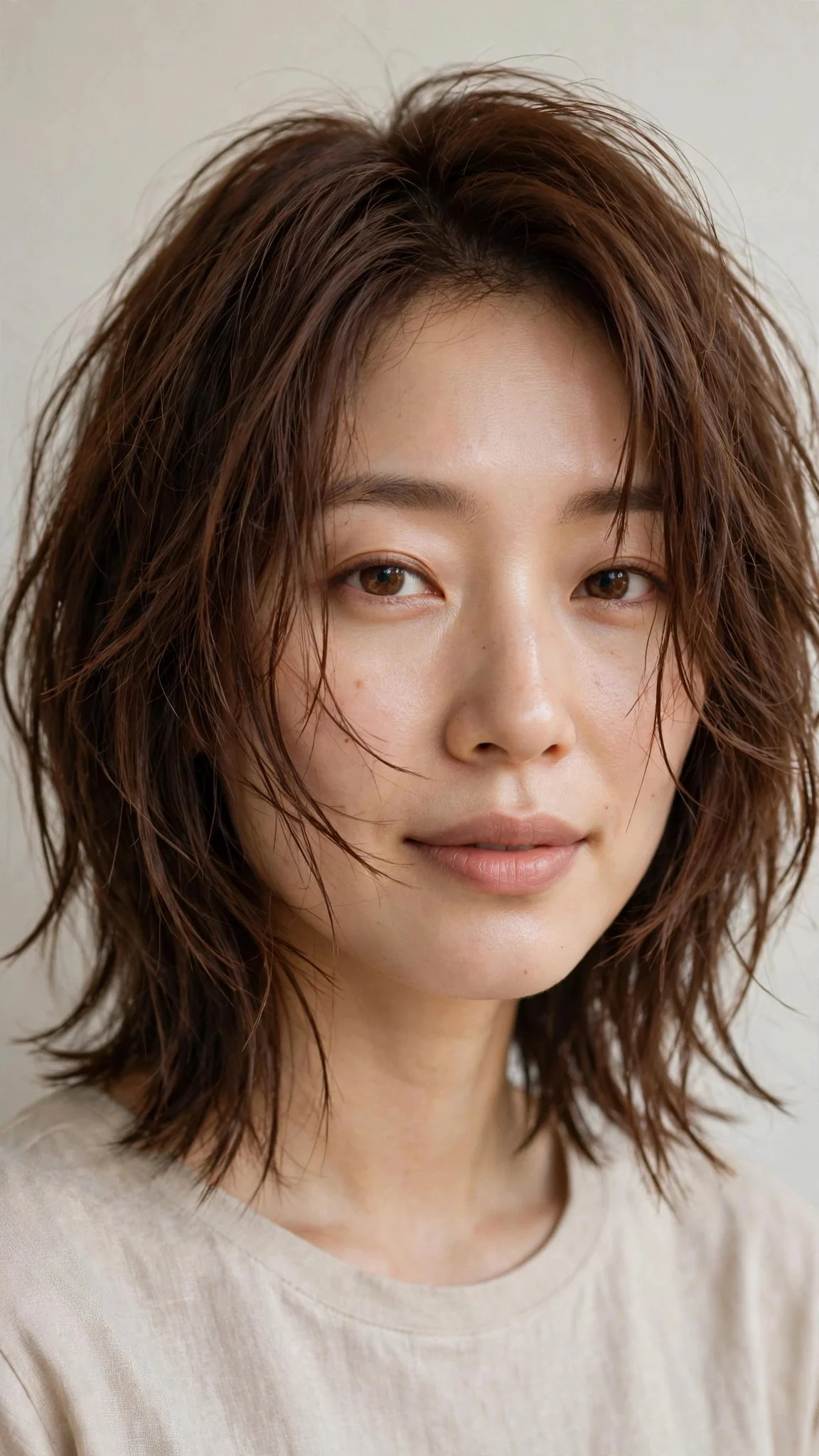
Choppy, piece-y face framing on a collarbone cut gives fine hair an edgy, modern texture. The uneven, broken-up ends create the illusion of more strands, so hair looks fuller and more interesting than a perfectly even cut ever could.
Ask your stylist for choppy, razor-textured face framing around a collarbone-length base. Work a tiny amount of texturizing paste through the ends of the front pieces only, twisting small sections for definition without weighing hair down.
15. Soft Shaggy Layers
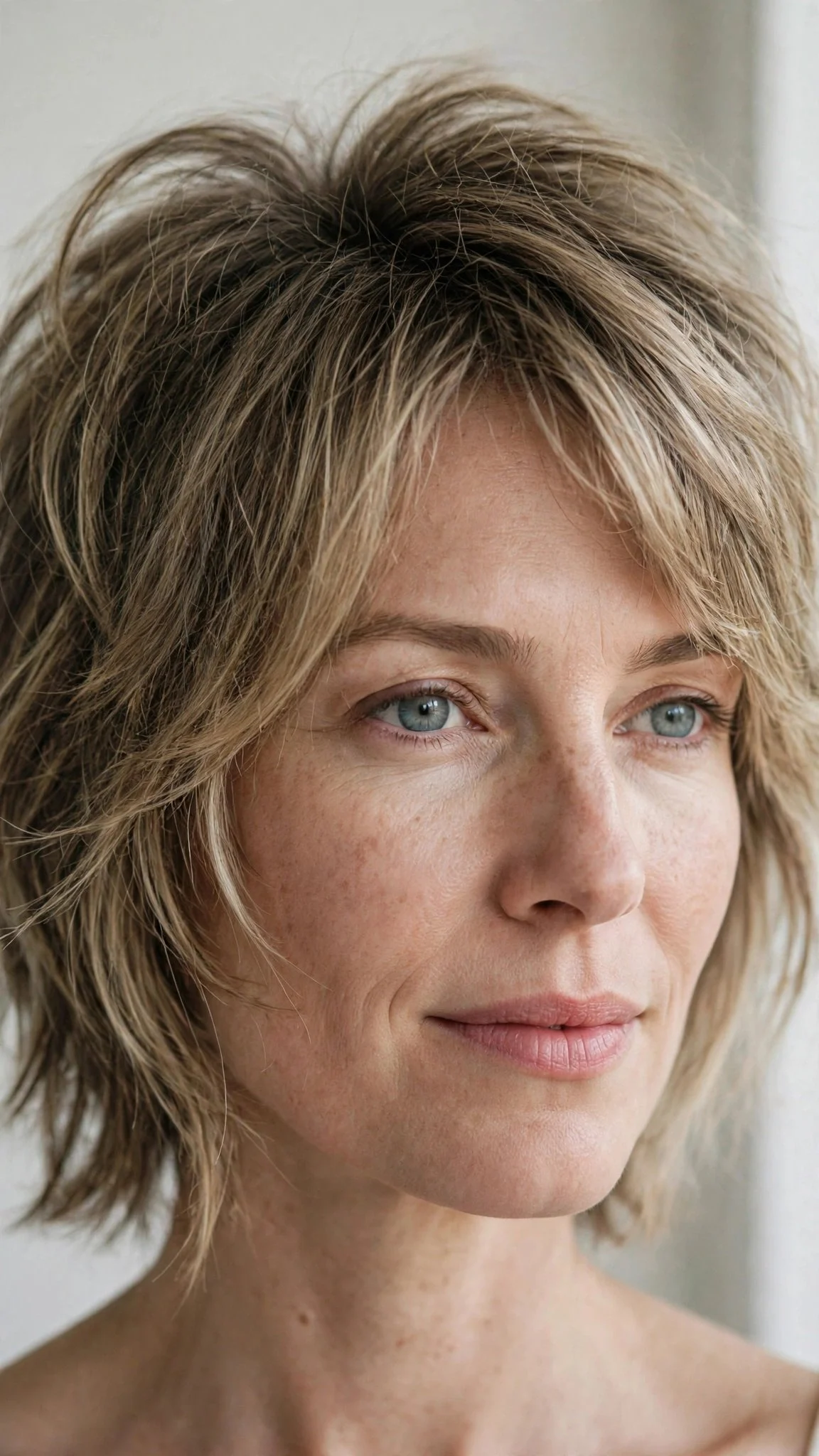
A softened shag with face framing concentrated around the crown and cheeks brings rock-and-roll volume to fine hair. The shorter top layers create lift at the roots while the face framing pieces add that effortless, undone texture.
Ask your stylist for a soft shag with lots of crown layering and face framing from the temples down, keeping ends intact for fullness. Diffuse upside down with a curl-enhancing mousse to maximize the shaggy texture, then shake out for separation.
16. Side-Swept Framing
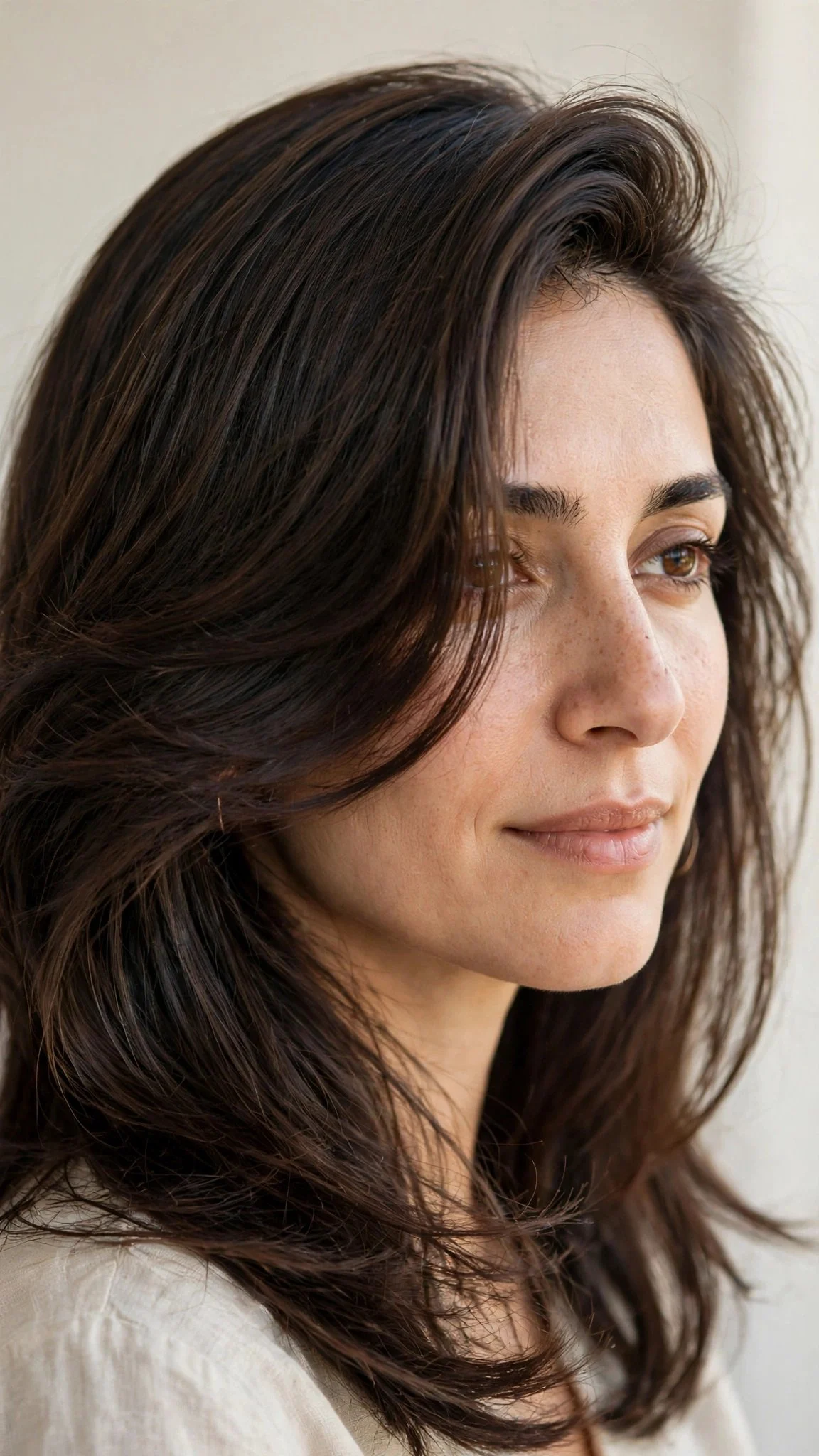
Side-swept face framing throws volume to one side, which is a classic trick for making fine hair look dramatically fuller. The deep diagonal sweep across the forehead and cheek creates asymmetry that the eye reads as abundance.
Ask your stylist for longer face framing cut on a diagonal so it sweeps naturally to your preferred side. Train the sweep by blow-drying the front section in the opposite direction first, then flipping it over for maximum root lift and staying power.
17. Root-Lifted Mid-Length Layers
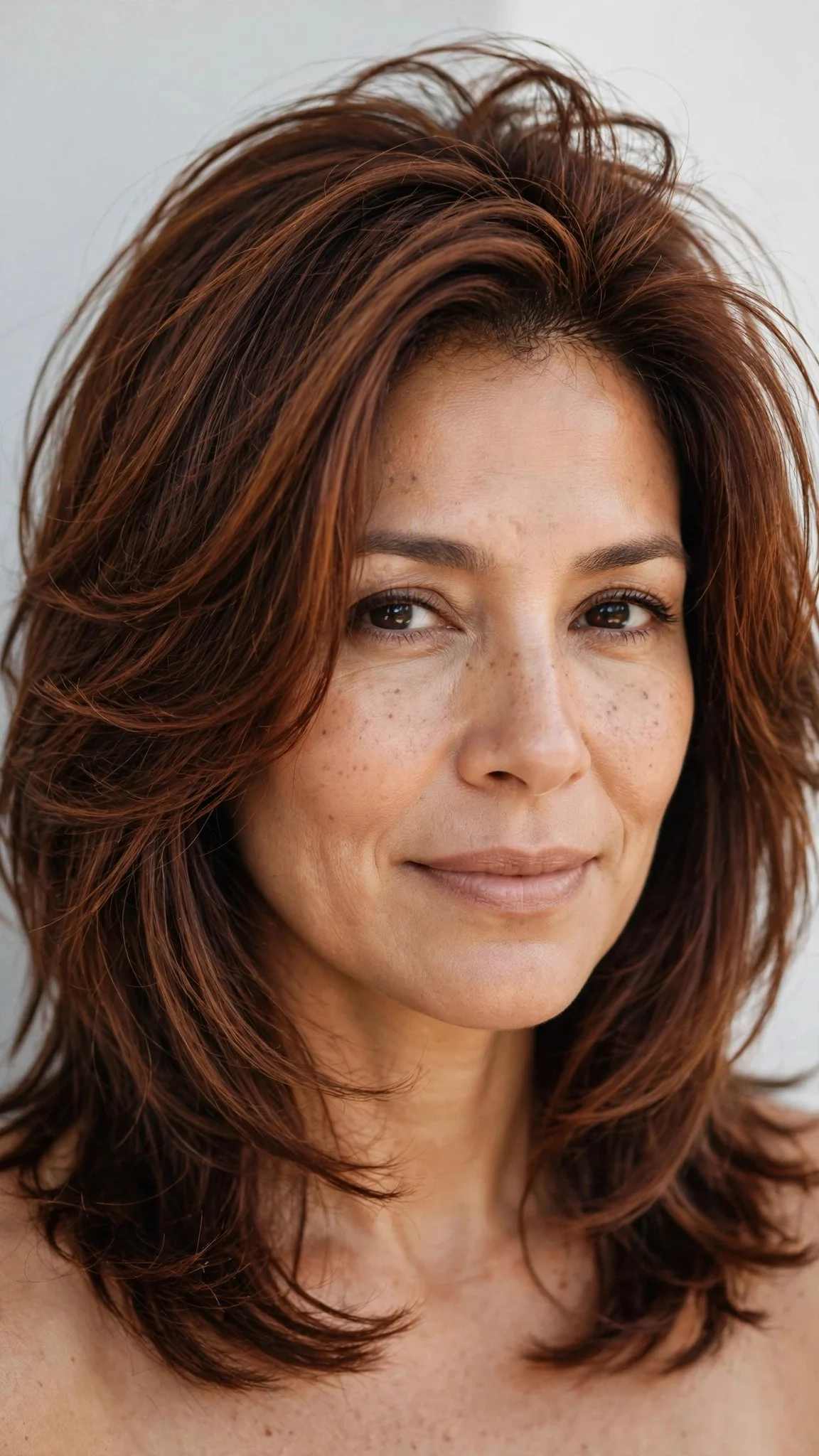
Mid-length hair with face framing and built-in root lift gives fine hair height where it needs it most: the crown. The framing pieces around the face keep the style soft and feminine while the lifted roots prevent the dreaded flat-top look.
Ask your stylist for mid-length face framing plus internal layers at the crown for lift. Blow-dry roots upward with a round brush or use large velcro rollers at the crown for 15 minutes while you finish getting ready, then remove for lasting lift.
18. Piece-y Collarbone Cut

Defined, piece-y strands around the face give fine hair a deliberate, styled look with tons of visual texture. When the front pieces are separated into soft ribbons, each one catches the light differently, multiplying the appearance of fullness.
Ask your stylist for face framing that can be worn piece-y, with slightly thinned ends for easy separation. Define pieces with a small amount of lightweight pomade on your fingertips, twisting the front strands gently instead of brushing them out.
19. Bouncy Blowout Layers

The bouncy blowout look relies on face framing layers that curl under and away from the face in big, soft waves. On fine hair, this style delivers maximum glamour and movement, with the front layers doing all the dramatic work.
Ask your stylist for bouncy face framing with rounded, layered ends that curve easily. Set the front sections in large velcro rollers or use a 1.5-inch curling iron rolling away from the face, then brush out gently for that soft, bouncy finish.
20. Face-Framing Lob
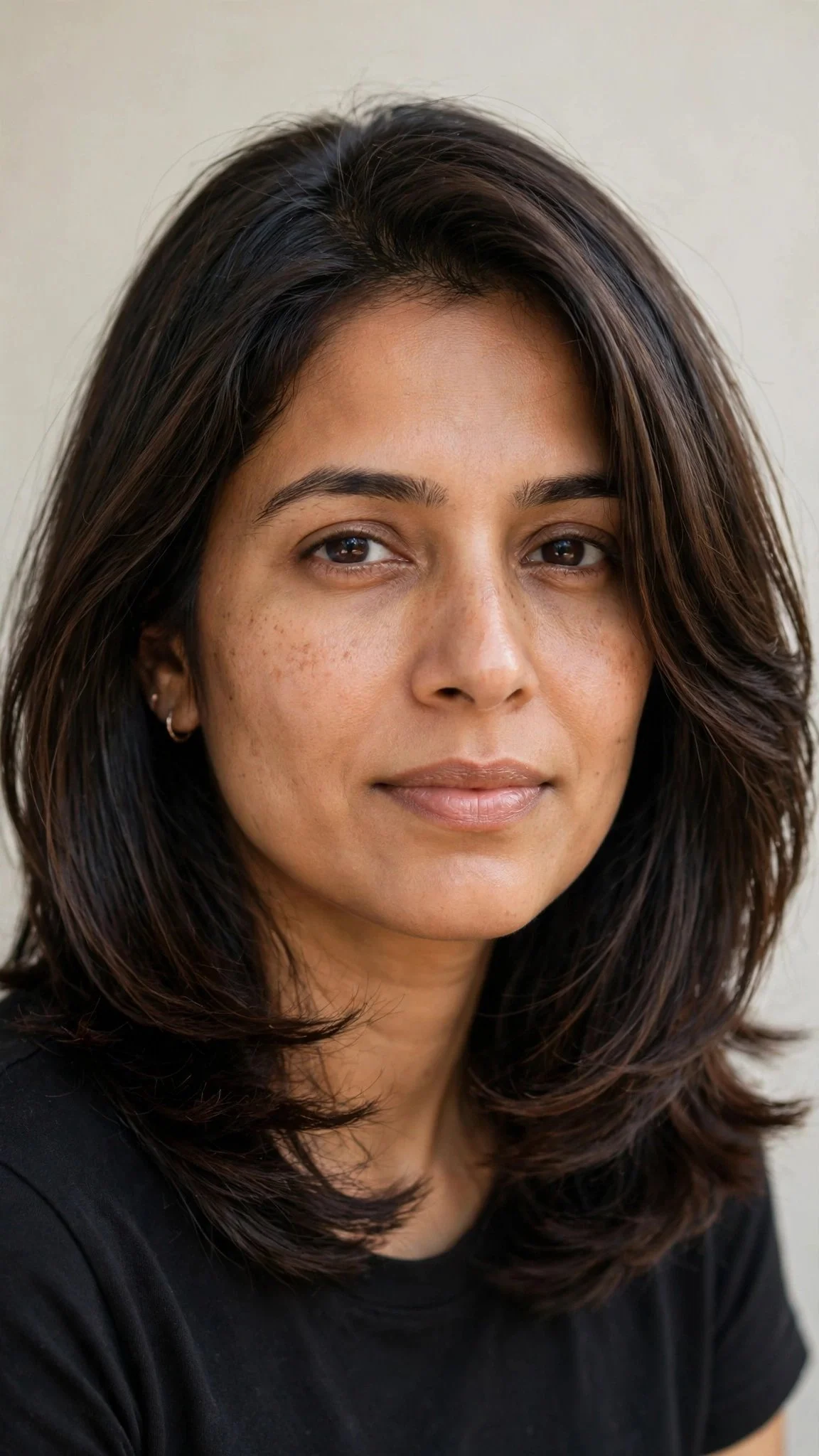
A long bob with strategic face framing is one of the most flattering shapes for fine hair. The lob length keeps ends looking thick and healthy, while the front layers add softness around the jaw and prevent the cut from feeling severe.
Ask your stylist for a lob that hits just above or at the collarbone with face framing from the chin down. Add loose waves with a flat iron for texture, or wear it sleek and straight for a polished, fuller-looking finish.
21. Tapered Neckline Layers
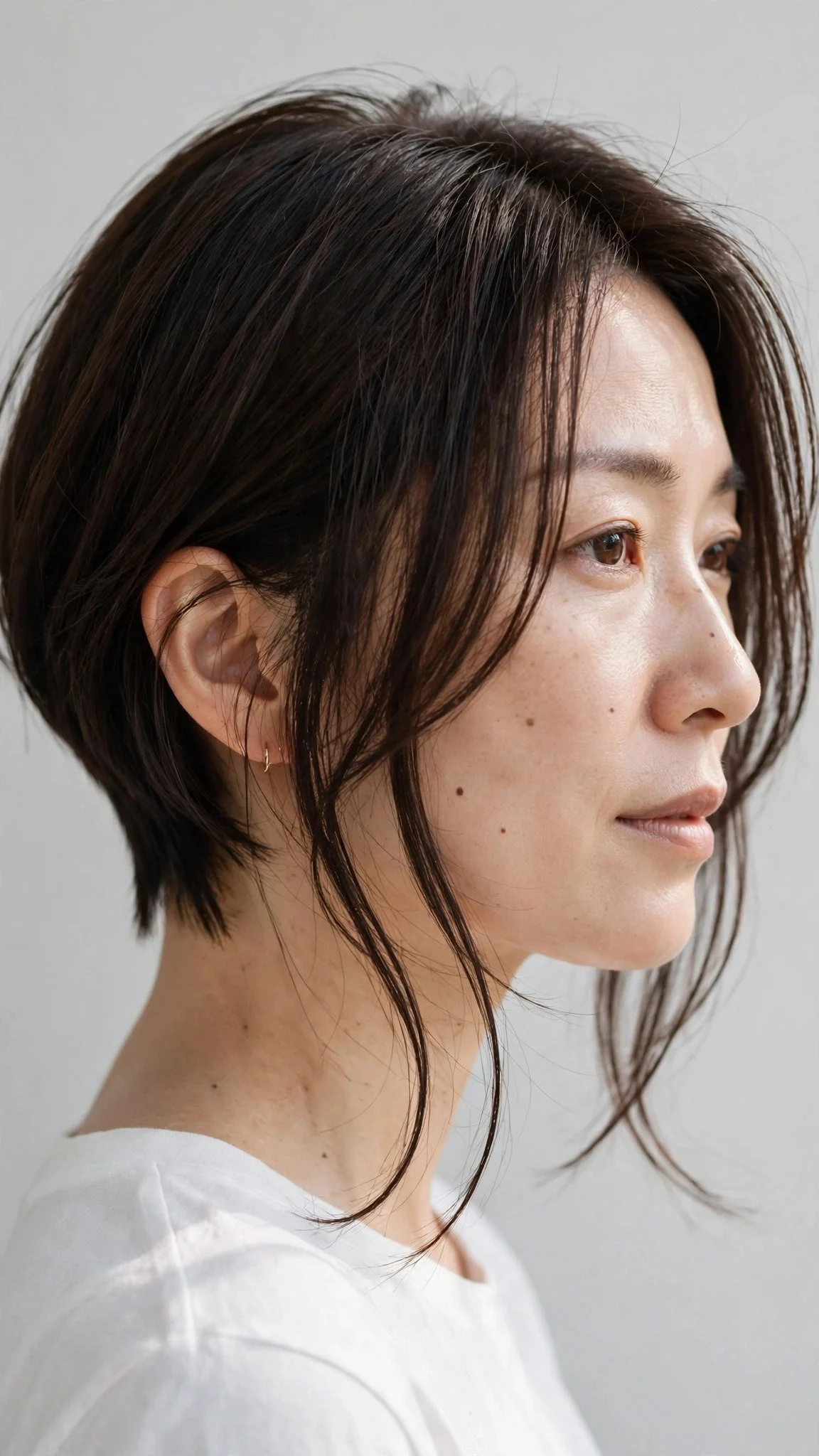
A subtly tapered neckline paired with longer face framing creates a beautiful silhouette on fine hair. The tapered back hugs the nape while the longer front pieces frame the face, making the hair look thicker in front and neatly shaped behind.
Ask your stylist for a gently tapered nape with the face framing left long and soft through the front. Keep the nape smooth with a small round brush while blow-drying, and let the front pieces fall naturally for contrast.
22. Effortless Middle-Part Layers
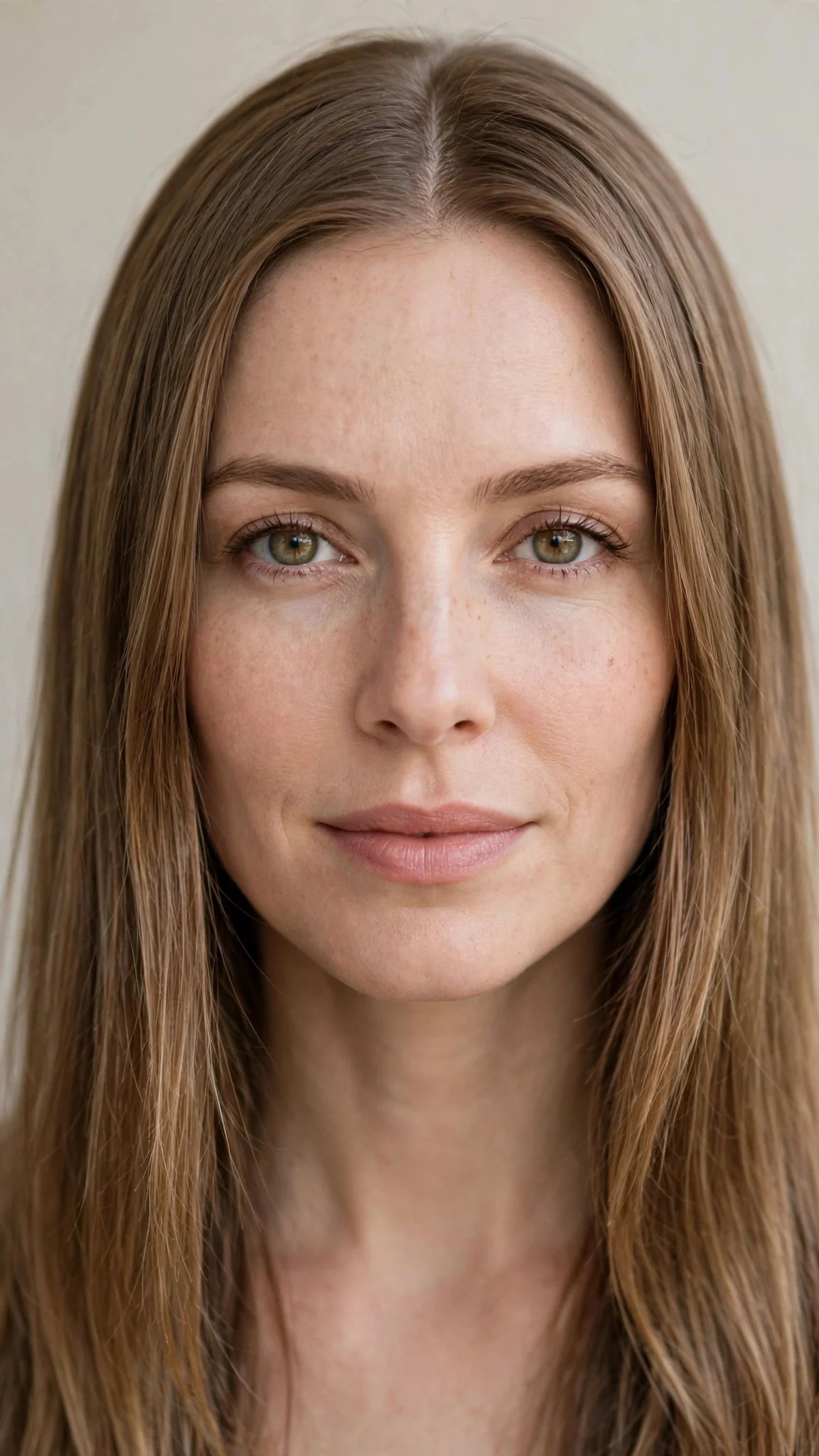
A clean middle part with balanced face framing on both sides gives fine hair symmetry and an easy, modern feel. The even framing draws attention to your eyes and cheekbones while the blended layers add quiet, wearable volume.
Ask your stylist for face framing cut evenly on both sides of a middle part, starting at the cheekbones. Part hair while damp to set the middle part, add a root-lifting spray at the crown, and blow-dry with a paddle brush for a smooth, balanced finish.
FAQs
Do face framing layers work on very fine, thin hair?
Yes, they are one of the best techniques for fine hair when done correctly. The key is keeping the framing soft and the ends full, so your stylist should avoid over-thinning the front pieces. Well-placed face framing adds movement and the illusion of volume without removing the density you need.
Will face framing layers make my fine hair look thinner?
They can if they are cut too short or thinned too aggressively. Ask your stylist to keep the face framing pieces long enough to fall naturally and to point-cut rather than razor-thin the ends. When the framing blends into a full perimeter, it makes hair look thicker, not thinner.
What length of face framing is best for fine hair?
For most fine-haired clients, framing that starts at the cheekbones or chin and extends to the collarbone works beautifully. Shorter framing adds drama but risks looking sparse, while very long framing can disappear into the length. Your face shape and hair density will fine-tune the ideal starting point.
How do I style face framing layers so they do not fall flat?
Focus on the roots: apply volumizing mousse or a root-lifting spray to the front sections while damp, then blow-dry the framing pieces up and away from the face with a round brush. Velcro rollers at the front for 10 to 15 minutes also give lasting lift without heat damage.
How often should I trim face framing layers on fine hair?
Every 6 to 8 weeks is ideal. Fine hair shows grown-out layers faster because the ends get stringy, and face framing loses its shape quickly. A quick bang-and-framing trim between full appointments keeps everything looking fresh.
Can I get face framing layers if I want to keep my length?
Absolutely. Face framing layers only shorten the pieces around your face, usually from the cheekbones down, while the back stays completely untouched. It is one of the few ways to get a visible change and added volume without sacrificing a single inch of length.
What products work best for fine hair with face framing?
Lightweight is the rule: volumizing mousse at the roots, a light texturizing spray for grip, and dry shampoo between washes. Avoid heavy oils and thick creams near the front pieces, since they flatten fine hair fast. A flexible-hold hairspray keeps the framing in place without stiffness.
Wrap Up
Face framing layers might just be the easiest upgrade fine hair can get. They add shape where you see it most, create movement without stealing length, and honestly make every hairstyle look more intentional. Whether you go for soft curtain pieces or bold chin-skimmers, the right framing works with your hair instead of against it.
Save the ideas that made you stop scrolling, and bring the exact wording to your stylist so you both picture the same cut. I would love to know which one you tried, so come back and tell me how it turned out.
I’m Marie, the founder and editor of Vivenglow.com. I share practical hairstyle, fashion, beauty, and lifestyle ideas, with helpful details that make it easier to choose, style, and recreate the looks you love.
Sarah Mark
- Content about haircuts, styles, ideas, and trends.
- Keeping it real and easy to follow.
- Helping you find a look.

The Conversation
Your voice matters. Discussions are moderated for civility.